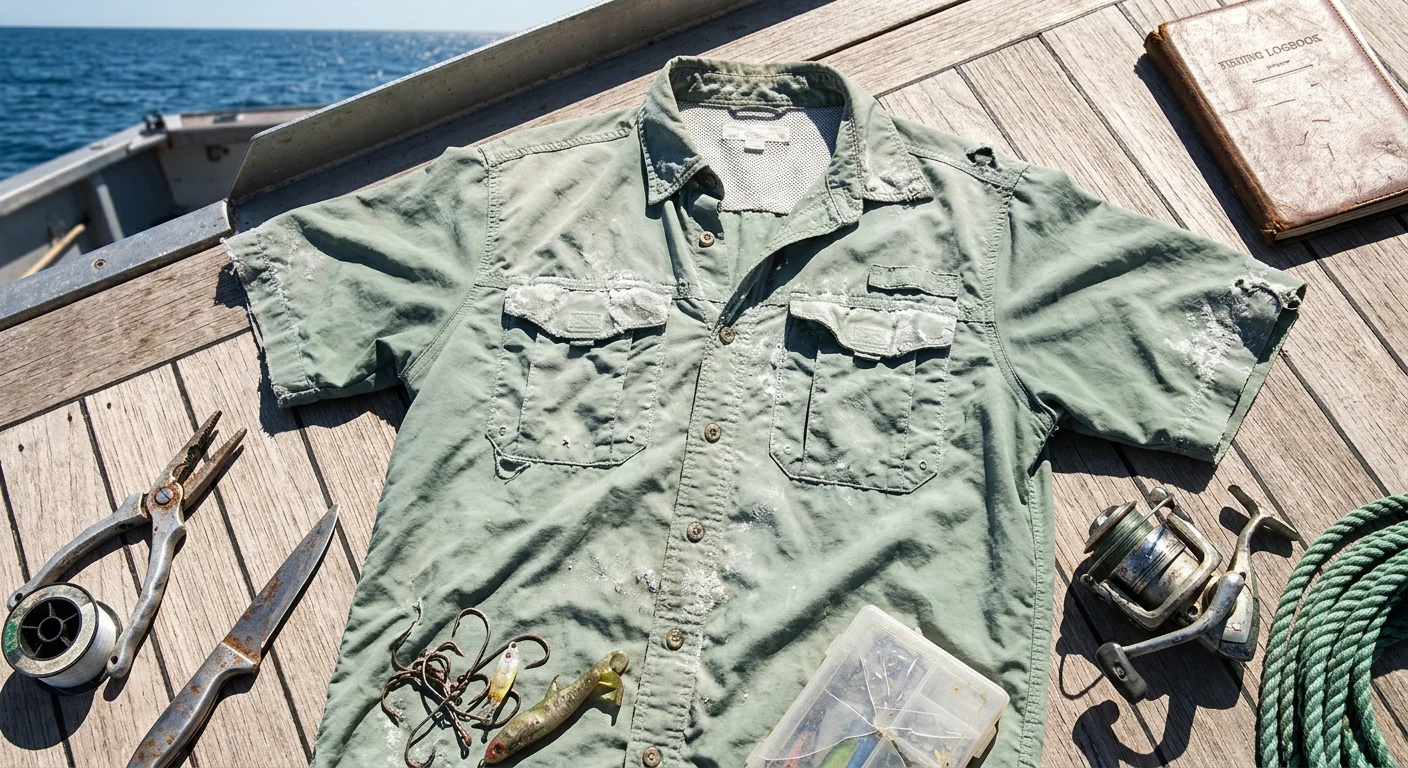
Standing in a fly shop for the first time can feel like trying to learn a foreign language while someone's clock is ticking on your patience. Line weight, tippet size, UPF ratings—the jargon alone can send a lot of beginners home empty-handed, or worse, with a $400 combo they didn't need. Choosing fly fishing gear for beginners including apparel and essential equipment gets simple once you understand what each piece does and why it matters for the water you'll be fishing.Brands can create custom fly fishing gear collections with performance-focused designs.
We'll cover picking a fly fishing rod and reel combo that matches your target species, building a line system that won't leave you frustrated on your first cast, and dressing smart so the elements don't cut your day short. By the end, you'll know exactly what to buy, what to skip, and where most beginners waste their money.
Identifying Your Target Species and Typical Fishing Conditions
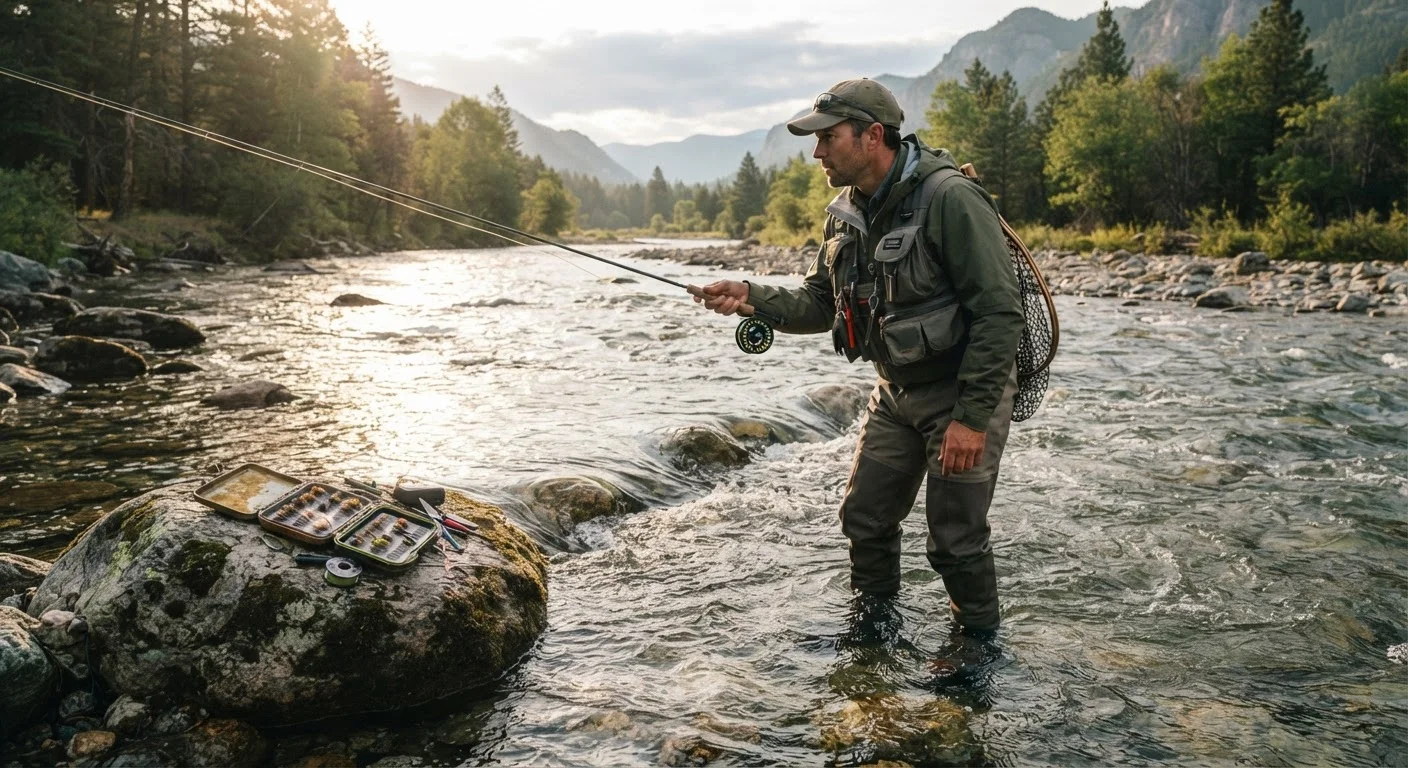
Before you spend a dollar on gear, figure out what you're actually trying to catch. This single decision determines your rod length, your fly line weight, and even which fly box patterns you'll need. Skip this step and you'll end up with a setup built for the wrong fish in the wrong water.
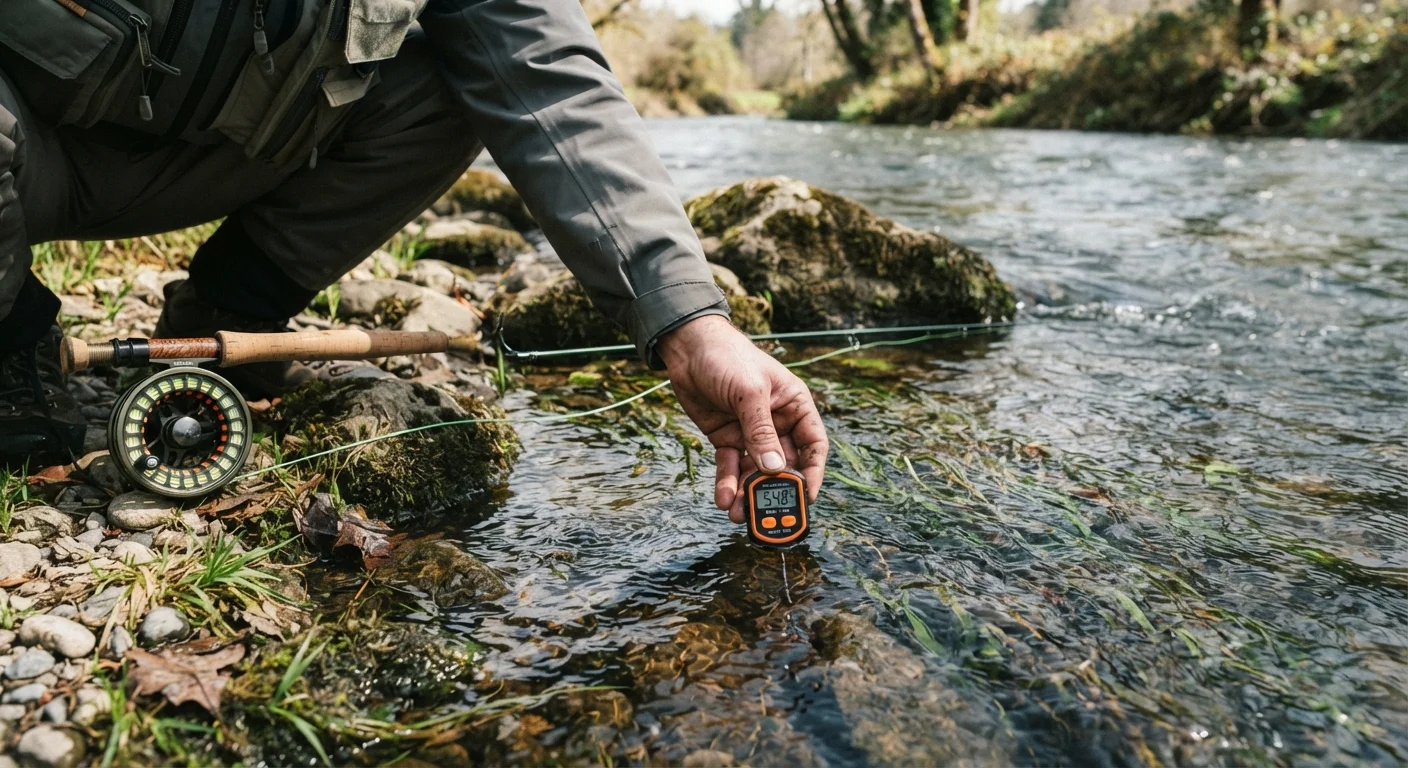
Trout are the classic beginner target. They live in cold, clean water—think riffles, pools, and undercut banks—and stay most active when water temps sit between 50–60°F. You'll find them holding in current seams, tucked behind rocks, sipping bugs off the surface or just below it.
Bass (largemouth and smallmouth) prefer warmer water, typically 60–80°F, and hang around weedlines, timber, and docks in 2–15 feet of depth. They're aggressive and forgiving for beginners learning to cast.
Pike ambush from weedy lake edges, often in 5–15 feet early in the season, then slide deeper as summer heats up.
Striped bass , if you're fishing coastal water, move with the tides and temperature shifts. Target points, rips, and river mouths during spring and fall runs.
A simple $15 handheld thermometer tells you more than any tackle shop clerk. Drop it in, check the temp, and match it against your target species' preference. Pair that with a quick look at structure—weedlines, rock-to-sand transitions, current breaks—and you've got a realistic read on where fish are holding before you ever make a cast.A fly fishing gear manufacturer helps develop products suited for different fishing environments.
Selecting the Right Fly Rod: Action, Length, and Weight
A fly rod comes down to three decisions stacked together: weight, length, and action. Get all three right, and your fly fishing rod and reel combo will feel like an extension of your arm. Get one wrong, and you'll spend your first season fighting the equipment instead of the fish.
Start with weight, because it drives everything else. Fly line weight and rod weight are matched pairs. You can't pick one without the other. For general freshwater trout fishing, a 5-weight rod is the industry-standard beginner recommendation. It handles dry flies, nymphs, and small streamers without feeling overgunned or underpowered. If you're fishing tiny mountain creeks with size #18–#22 flies, drop to a 3–4 weight . Bass anglers need more backbone—go 6–7 weight to turn over poppers and weighted streamers. Steelhead and salmon push you into 7–8 weight territory.
Length affects how you handle your line on the water. Tight, brushy creeks demand a shorter 6–7 ft rod so you can maneuver under branches. Standard trout rivers call for 8–9 ft ; that's the most versatile range for beginners. Big rivers, complex currents, or stillwater fishing from a float tube benefit from 9'6"–10 ft for better reach and mending.
Action controls your casting timing. Fast-action rods flex in the tip, load quickly, and punch through wind, but they punish bad timing. Medium-fast action bends through the top half, balancing power with feel. Most guides recommend it as the beginner's sweet spot. Medium or slow action rods flex deep into the butt section, rewarding patient, deliberate casters with delicate presentations. They're great for spring creeks, tough as a first rod.
The widely-cited beginner benchmark is a 9 ft, 5-weight, medium-fast action rod, ideally in a 4-piece travel configuration.Private label fly fishing equipment allows brands to launch their own outdoor collections. This single spec covers trout, panfish, and light bass fishing across rivers, lakes, and streams. It's the backbone of nearly every fly fishing starter kit sold today.
Assembling Your Fly Line System: Fly Line, Leader, and Tippet
Your rod is only half the equation. Your fly line, leader, and tippet determine whether your fly lands like a feather or slaps the water like a brick. Get this system wrong, and even a $600 rod won't save you.
The standard setup runs in one direction: backing, then fly line, then leader, then tippet, then fly. Each piece has a job, and skipping the logic behind it is where most beginners waste money on mismatched components.
Backing sits on your reel first, underneath everything else. Braided Dacron is the trout-fishing standard. Spool on 75–100 yards, attached with an Arbor knot. You'll rarely see this line unless a big fish runs deep, but it's cheap insurance.
Fly line weight has to match your rod weight exactly. A 5-weight rod needs 5-weight line, no exceptions. For beginners, a weight-forward floating line (labeled WF5F) is the easiest to cast. AFFTA standards set the head weight in the first 30 feet: a 4-weight runs about 120 grains, a 5-weight sits at 140 grains, and a 6-weight climbs to 160 grains.
Leader and tippet work together as the invisible link between your fly line and the fish. A 9-foot leader in 4X or 5X is the standard beginner choice. Tippet adds roughly 2 feet beyond that, and it's intentionally weaker than the leader. If a fish snaps your line, you lose the cheap tippet, not the whole leader.
A simple sizing trick: divide your hook size by 4, add 1, and you've got your tippet X-rating. A size 16 hook lands you at 5X. A size 12 points to 4X.
Connect everything with five knots: Arbor, Albright (or loop-to-loop), Nail knot, Surgeon's knot, and Improved clinch. Master those five, and you can rig any fly fishing starter kit from scratch.Reliable fly fishing gear suppliers provide consistent components for growing tackle brands.
Choosing a Balanced Fly Reel and Backing
Most beginners obsess over the rod and botch the reel. Match reel capacity to your rod and line weight so the outfit balances in your hand.
Reel sizing runs on a simple range system. A 5-weight rod pairs with a 4/5 or 5/6 reel. A 6-weight bumps up to 5/6 or 6/7. Go smaller (3/4 for a 3-weight) or bigger (8/9 for an 8-weight) and you'll either starve your backing capacity or end up with a reel that fights your rod's natural flex.
Backing capacity by reel size: for 3-4 weight reels, 25-100 yards of 20 lb Dacron; for 5-6, 75-125 yards of 20 lb (100-125 yards is the pro standard for trout); for 7-8, 100-150 yards of 20-30 lb; for 9-10, 150-250 yards, often 30 lb.
For general trout fishing, 100 yards of backing is the average benchmark. Adjust upward if you're fishing big rivers or chasing hot fish that run deep.
The Finger-Balance Test
String your backing and fly line through the guides first. Their weight matters. Attach the reel, hold the rod horizontal, and rest one finger where the cork meets the blank. If the tip dips, your reel's too light; go heavier or add backing. If the butt dips, size down or trim the backing. This ten-second test saves you from buying a rig that feels great in the shop and exhausting on the water eight hours later.
Dressing for the Water: Waders, Wading Boots, and Fishing Apparel
Cold water doesn't care how good your cast is. Get your apparel wrong, and you'll cut a promising trout trip short after twenty minutes.
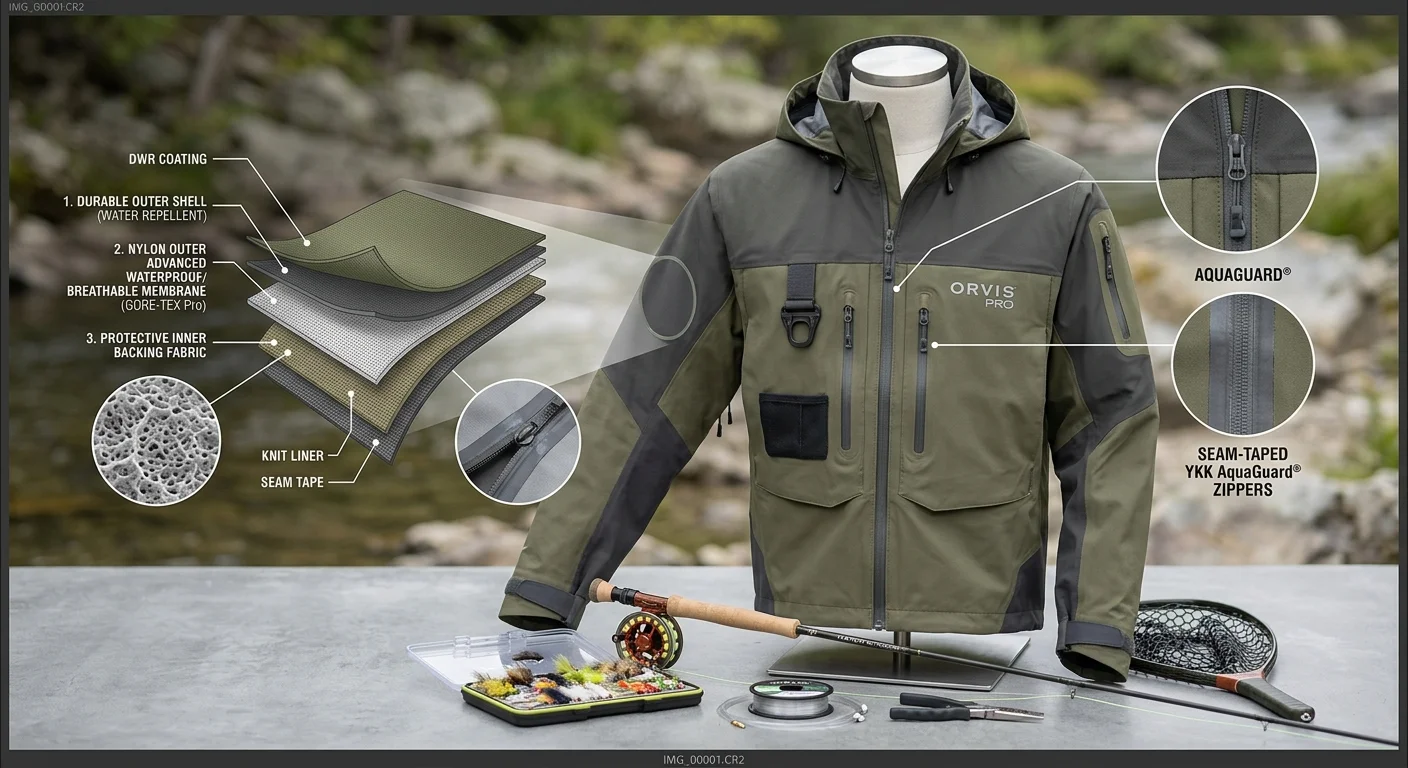
Waders fall into three price tiers. Entry-level chest waders like the Frogg Toggs Hellbender or Canyon II run $90–$130 —fine for occasional trips. Midrange options like the Simms Freestone ( ~$300 ) or Orvis Clearwater ( $249–$279 ) use multi-layer breathable fabric built for weekend regulars. Guide-grade waders—Simms G3, Orvis PRO ($598), Skwala RS—sit at $500–$800+ with reinforced knees and heavier fabric for daily abuse.
Most serious anglers choose stockingfoot waders over bootfoot. Stockingfoot pairs with separate wading boots for better traction and fit. Bootfoot integrates the boot but feels bulkier.
Wading boots run $80–$130 entry-level, $140–$200 midrange, $230–$300 for guide-level pairs. Buy boots 1–1.5 sizes larger than your street shoe — the neoprene bootie inside your waders needs room. Felt soles grip slick rocks but are banned on some waters; rubber with studs is the safer all-around choice.
Layering matters more than the wader itself. Synthetic or merino base layers (150–200 g/m² warm, 250–320 g/m² cold) keep sweat off your skin. Skip cotton entirely. Below 50°F, add a liner sock plus a wool outer sock.OEM/ODM fly fishing apparel services help brands develop customized fly fishing apparel with functional materials.
A wading belt isn't optional gear — it's safety equipment. Cinched tight, it slows water flushing into your waders if you fall.
Round out your kit with a breathable fly fishing vest for storage, UPF-rated layers for sun exposure, and polarized fishing sunglasses to spot fish through glare before they spot you.Specialized fly fishing apparel factories support technical fabric and apparel production.
Protecting Yourself from the Elements: Sun Protection and Outerwear
Sunburn ends more fishing trips than bad weather does. Standing waist-deep in open water for six hours means UV rays hit you from above and reflect off the surface below—a double exposure most beginners never plan for. You need five layers, not one.
Build your defense in five layers:
Slip on UPF-rated clothing covering arms, legs, and shoulders. A good test: if you can't see your hand through the fabric, it's blocking UV. Tightly woven, darker fabrics outperform loose, light-colored ones.
Slop on broad-spectrum sunscreen, SPF 30+ minimum, applied 20–30 minutes before you hit the water. Use about 1 ounce —roughly 7 teaspoons—for full coverage, and don't skip your feet if you're wearing sandals.
Slap on a wide-brim hat with a 3–4 inch brim all the way around. It shades your face, ears, and neck. A baseball cap can't do that.
Slide on polarized fishing sunglasses rated UV400 or blocking 100% UVA/UVB. Beyond eye protection, polarization cuts glare so you can spot fish before they spot you.
Seek shade during peak UV hours, roughly 10 a.m. to 4 p.m. , especially when the UV Index hits 3 or higher.
Reapply sunscreen every two hours, and immediately after wading through deep water or sweating through a hot afternoon. Skip any single piece of this stack, and you're gambling with a sunburn that'll follow you home.
Gathering Your Essential Tools and Accessories
A rod, reel, and line get a fly in the water. But a handful of small accessories decide whether you land what you catch. Most beginners skip this list, then stand streamside fumbling with teeth to cut tippet or bare fingers to unhook a trout. Don’t be that angler.
Nippers and forceps are non-negotiable. Nippers trim tippet cleanly in one snip. Your teeth will shred the line and eventually chip a tooth. Forceps (hemostats) remove hooks fast and safely, especially from a fish’s throat where fingers don’t fit. Both clip to a zinger on your vest for instant access.
Floatant keeps dry flies riding on the surface instead of sinking after one cast. A $6 bottle lasts a full season.
A fly box organizes your patterns by type, like dries, nymphs, and streamers, so you’re not dumping flies loose into a pocket. Foam-slot boxes hold small flies securely; ripple-foam works better for bigger streamers.
A fly fishing net with rubber mesh protects a trout’s slime coat and makes releases faster, cutting stress on the fish and your handling time.
Your fly fishing vest or sling pack ties it all together with pockets for fly boxes, zingers for tools, and a spot for tippet spools. Buy one with a built-in retractor for forceps and you’ll never lose them mid-fight.
Round out your fly fishing starter kit with a compact first-aid kit and a small flashlight for early mornings. None of this costs much, but skip it and you’ll wish you hadn’t within your first hour on the water.
Common Beginner Mistakes When Buying Fly Fishing Gear
Beginners blow their budget on the wrong things, in the wrong order. Money gets wasted on these six mistakes.
Mistake #1: Buying the full outfit before your first cast. Many new anglers walk into a shop and spend $1,000+ on rod, reel, line, waders, vest, and flies before knowing if they like the sport. Book 2–3 guided trips with gear provided first. Buy your own setup after you know what you're using.
Mistake #2: Waders before you need them. Most beginner trout streams and warm-water spots fish fine from the bank. Skip the $300–$500 wader purchase until you're wading deep regularly.
Mistake #3: The wrong rod length and weight. Beginners either grab a short "novelty" rod or overbuy a heavy one. Stick with 9 ft, 5-weight, medium-fast for trout.
Mistake #4: Complex rigs too early. Multi-fly droppers create tangles and frustration. Run one fly on a 7–9 ft leader until your casting is solid.
Mistake #5: Cheap, mystery fly assortments. Gas-station flies aren't real patterns. Build a box of 10 proven flies — 5 dry, 5 nymph/streamer — from a local shop.
Mistake #6: Skipping casting lessons. New anglers chase gear upgrades instead of 1–3 casting lessons and 5–10 hours of practice. Line control matters more than rod price.
Conclusion
You don't need a garage full of gear to catch your first trout. What matters is a properly matched fly fishing rod and reel combo, a line weight suited to your target water, and clothing that keeps you comfortable enough to stay on the water longer.
That last point trips up more beginners than they expect. I've seen anglers drop serious money on a premium rod, then freeze or burn in cheap, ill-fitting apparel that cuts their trip short. Don't make that mistake.
If you're still feeling overwhelmed, grab a solid fly fishing starter kit for your core equipment, then invest in apparel that actually fits your body and your fishing conditions—not just whatever's on the rack. Your first season on the water should be about building confidence, not fighting your gear. Get the fundamentals right, and everything else follows.Retailers can explore custom wholesale price options for fly fishing apparel collections.