Sourcing a manufacturer for UPF fishing shirts isn't just about finding a factory with idle machines—it's about finding a partner who understands the difference between a shirt that merely looks technical and one that actually performs when a client is knee-deep in a river at noon. That distinction matters more than most sourcing guides let on, and it's exactly why Portugal has quietly become a go-to hub for brands serious about moisture-wicking performance fabric and sublimation printing fishing apparel that holds up to both saltwater and scrutiny.
Below, we break down 3 Portuguese fishing shirts manufacturers worth your attention—what they're genuinely good at, where their production capabilities shine (and where they don't), plus the certifications and MOQs that'll actually affect your bottom line. Whether you're a startup brand testing the waters or a retailer ready to scale private label fishing wear, you'll walk away knowing exactly who's worth an inquiry email.
CFB – Create Fashion Brand: Expert in High-End Knitted Blanket Fabrics
Barqueiros isn't a name most sourcing managers know. It's a small town in northern Portugal, and it's where CFB – Create Fashion Brand has been running looms since 1989. That's over three decades of vertical production—weaving, dyeing, printing, and sewing all under one roof. When a Performance Fishing Shirt factory controls every stage, they control quality. And when you're building UPF fishing shirts that need to perform, that kind of control is the difference between a supplier and a real manufacturing partner.
What CFB Brings to the Table
CFB runs two facilities—the Barqueiros showroom and a second production site in Póvoa de Varzim—with a team of more than 110 skilled workers. They're known as go-to zero-waste manufacturers for luxury and streetwear brands. That means they know how to handle demanding clients, and they've got sustainability built into their process (organic cotton, recycled polyester, locally-produced eco fabrics).
This is where it gets relevant for fishing apparel. CFB doesn't market "fishing shirts" as a category on their site, but their fabric library is a near-perfect match:
Poly-cotton blends (65/35 poly-cotton, 120–160 g/m²) for quick-dry, low-maintenance performance
Nylon-spandex blends (nylon with 3–5% spandex, 80–120 g/m²) for lightweight, fast-drying builds
Organic cotton/recycled poly (55/45 blend, 140–170 g/m²) for brands leaning into sustainability
For UPF protection, CFB can source or apply tight-weave polyester and nylon bases—often finished with titanium dioxide or ceramic particle treatments—to hit UPF 30 to 50+ ratings reliably. Add mesh knit panels (60–90 g/m²) at the back and underarms, and you've got breathable quick-dry fishing apparel that checks every technical box.
MOQs, Pricing, and Timelines
CFB works three ways: full development from scratch, customization of blank garments, or their "Shop Blanks" wholesale line (no MOQ, but limited to stock designs). For custom functional fabric like UPF or moisture-wicking builds, expect MOQs in the 200–600 units per color/style range, driven by minimum dye-lot and finishing-line batch sizes. Pricing for OEM fishing shirts lands between €12–24 per unit FOB , depending on fabric weight and UPF grade. Sampling runs 3–5 weeks start to finish, with lab-dips taking 7–10 days for specialty UPF treatments alone.
If you need documentation, ask directly for OEKO-TEX certificate numbers. CFB talks a lot about eco-responsible fabrics, but published certificate details aren't public yet, so verify this before you sign anything.
Confetil: A Vertical Technical Knitwear Manufacturer
Confetil sits just outside Porto and runs one of Portugal's larger technical knitwear operations. With 201–500 employees handling knitting, dyeing, and cut-and-sew under one roof, it's a full-scale vertical manufacturer built for volume with full technical control.
Capacity That Matters for Bulk Orders
Confetil doesn't publish exact monthly output, but the math holds up against comparable Portuguese fishing knitwear factories of this size. A facility with 6–8 dedicated garment lines typically produces 25,000–35,000 units per line each month. Multiply that across Confetil's workforce, and you get 200,000–350,000 units per month, especially when seasonal subcontracting is factored in.
If you're vetting them for a private label fishing wear launch, ask one thing: can they deliver 1,000–5,000 units within 7–15 days? That small-batch fast-turnaround capability is the real sign of a factory operating at this scale.
Technical Fabric Performance You Should Demand
As a technical fabric fishing shirts specialist, Confetil should hit the benchmarks that matter for UPF fishing shirts:
UPF rating : 40–50+, blocking 98%+ of UVA/UVB
Breathability : 400–800 L/m²/s for mesh-knit structures
Wicking speed : 20–40 minutes for simulated sweat to dry
Vertical wicking height : 80–120mm over 30 minutes
For base layers, push for fabrics in the 120–180 g/m² range with 500+ L/m²/s airflow and stretch recovery above 90%. Request actual UPF test reports with the standard cited, plus wicking and airflow data with pressure conditions noted.
Sustainability Credentials Worth Verifying
Portuguese knitwear exporters of this size typically carry OEKO-TEX Standard 100 certification (70–80% do). About a third also hold GOTS or GRS for organic and recycled-content lines. Ask Confetil for certificate numbers and which product lines fall under each certification's scope—organic cotton base layers, recycled polyester fishing shirts, and so on.
The Real Advantage: In-House Fabric R&D
This is where vertical integration pays off. Factories that develop fabric internally cut sampling time from the industry-standard 20–30 days down to 3–7 days, and bulk delivery drops to 10–20 days instead of 30–45. That speed also trims fabric costs by 5–15%, since you're skipping the trading-company markup.
Customfishingwear (China):Small-batch flexible manufacturer
A factory that has spent seventeen years making only water-sport apparel develops a narrow but deep specialty. CustomFishingWear built its entire operation around fishing shirts, ice-fishing suits, bibs, and thermal layers. Nothing else pulls focus. That's rare, and it shows in how flexible their MOQs are.
Where Small Batches Work
Sublimation fishing shirts : 50–100 units per style is standard
ODM with color/logo changes : 50–200 units gets you started
High-stretch ice-fishing outerwear : needs 300–500 units per color because the fabric requires full-roll cuts
The sweet spot is testing. A startup launching 1–3 UPF fishing shirt designs, each in 2–3 colors at 20–30 units per color, lands around 60–90 total units. That's enough to gauge which pattern and size structure sells.
The Cost Trade-Off
Small-batch production costs 10–30% more per unit than large factories running 500–1,000 unit orders. A shirt that costs $3–4 FOB at scale often runs $3.5–5 in flexible small batches fishing shirts . Sampling fees ($50–100 per style) and rush charges (5–15%) add up fast if you're not careful. Stick to in-stock UPF polyester and existing pattern blocks, though, and you'll keep that price gap closer to 10–15%.
Why Portugal for Performance Fishing Shirt Manufacturing
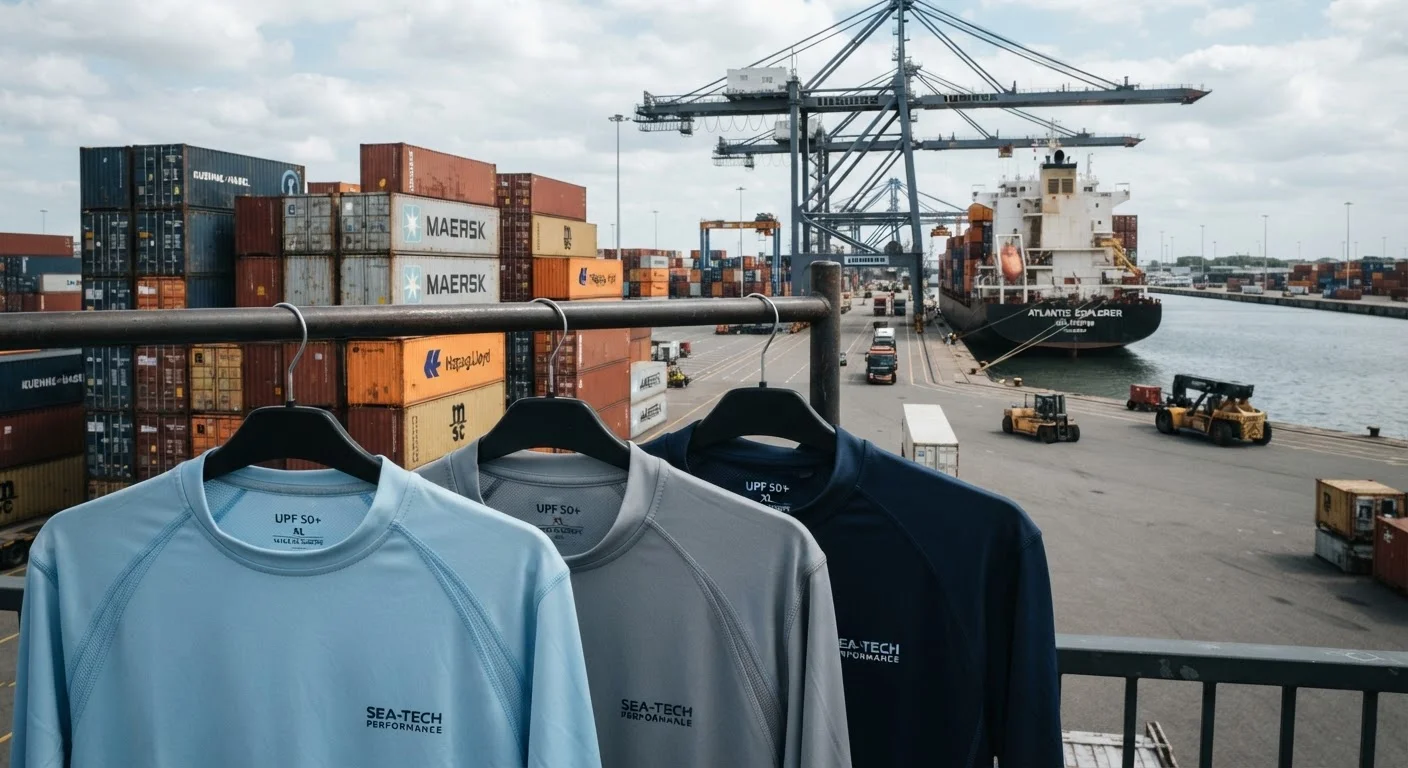
A shirt sitting in a container for six weeks doesn't help anyone hit a spring launch window. Portugal's rise as a serious option for brands sourcing UPF fishing shirts and technical fabric fishing shirts comes down to logistics and craftsmanship working in tandem.
Speed That Matches Fishing Season
Fishing gear sells on seasonal windows. Miss the window, and you're sitting on inventory until next year. Portuguese factories run 1–4 weeks for straightforward orders, or 4–8 weeks for more complex builds. Compare that to 12–24 weeks out of Asia. That's the difference between catching a retail reset and missing it.
Shipping compounds the advantage. Goods move to major European markets in 2–5 days by road, sometimes 24–48 hours to key hubs. Even transatlantic shipments to the US East Coast land in 7–10 days by ocean freight. Against weeks of Pacific crossing time, Portugal's geography pays for itself.
Cost
Portugal isn't cheap. Unit prices run 15–30% higher than Asia, sometimes 20–40% higher for sportswear categories.
But total landed cost tells a different story. No EU customs duties apply (which range 9.6% to 12% on non-EU textiles), and lower freight and fewer delays close the gap fast. For brands selling into the EU, Portugal often wins once you stop comparing FOB price tags and start comparing what actually lands in your warehouse.
Small-Batch Flexibility Built for Testing
Portuguese factories are comfortable with 50–200 units per style. It's a batch size their production model was built around. That flexibility matters more than raw capacity numbers when you're launching a private label fishing wear line and testing two or three colorways before committing to a full run.
Technical Skill Where It Counts
Moisture-wicking performance fabric, anti-UV fishing clothing, stretch-bonded seams, and odor-resistant finishes require strong pattern engineering and material handling—the exact disciplines that separate a shirt that fits like cardboard from one that moves with a caster.
Compliance and Cluster Density
Producing under EU labor and environmental law gives brands cleaner compliance documentation, something increasingly non-negotiable for retailers auditing supply chains. GOTS and Oeko-Tex certifications are common across Portuguese mills.
Northern Portugal also runs on proximity. Certified mills, dye houses, and cut-and-sew factories often sit within a 100-kilometer radius, which shortens fabric sourcing cycles and speeds up sampling in ways that scattered supply chains cannot match.
For any custom sportswear manufacturer weighing Portugal against Asia, the choice is straightforward. Asia wins on raw unit cost. Portugal wins on speed, technical refinement, and total landed economics—especially for EU-facing brands unwilling to gamble six months of lead time on a fishing season that only lasts twelve weeks.
Three major manufacturers' selection decision matrix
A spreadsheet with seven weighted criteria beats gut instinct every time. Most sourcing failures happen because brands pick a factory for fast email replies, ignoring whether the numbers match the business needs.
Here's how the three factories stack up when you run them through a weighted scorecard: MOQ flexibility (15%), monthly capacity (20%), certification depth (20%), lead time reliability (15%), price competitiveness (10%), defect rate (10%), and support services (10%). Score each 1–10, multiply by weight, total it up.
Criteria | CFB | Confetil | Customfishingwear |
|---|---|---|---|
MOQ Flexibility | 6 | 4 | 9 |
Monthly Capacity | 5 | 9 | 3 |
Certification Depth | 6 | 8 | 5 |
Lead Time | 7 | 8 | 6 |
Price Competitiveness | 7 | 8 | 5 |
Defect Rate Control | 7 | 8 | 6 |
Support & Fabric R&D | 8 | 9 | 6 |
Run the math, and Confetil pulls ahead on raw weighted score. That's no surprise for a vertically integrated technical fabric fishing shirts manufacturer built for volume. But raw score isn't the same as right fit.
Match the factory to where your brand actually stands.
Testing a new UPF fishing shirt line? Customfishingwear's 50–100 unit MOQs win on flexibility, even if the per-unit cost runs 10–30% higher. You're paying for the right to fail cheap.
Scaling past your first 1,000-unit reorder? Confetil's 6–8 garment lines and in-house fabric R&D shrink sampling from 20–30 days down to 3–7. That speed compounds once you're running multiple SKUs.
Building a premium anti-UV fishing clothing line with sustainability claims? CFB's zero-waste production and organic cotton/recycled poly blends carry more brand story than either competitor, even with mid-tier capacity numbers.
Set your AQL standard (2.5 or 4.0), lock in a payment structure (30% deposit, 70% before shipment is standard), and require a pre-shipment inspection on the first order regardless of which factory wins your scorecard. The matrix picks a favorite. Due diligence still closes the deal.
Conclusion
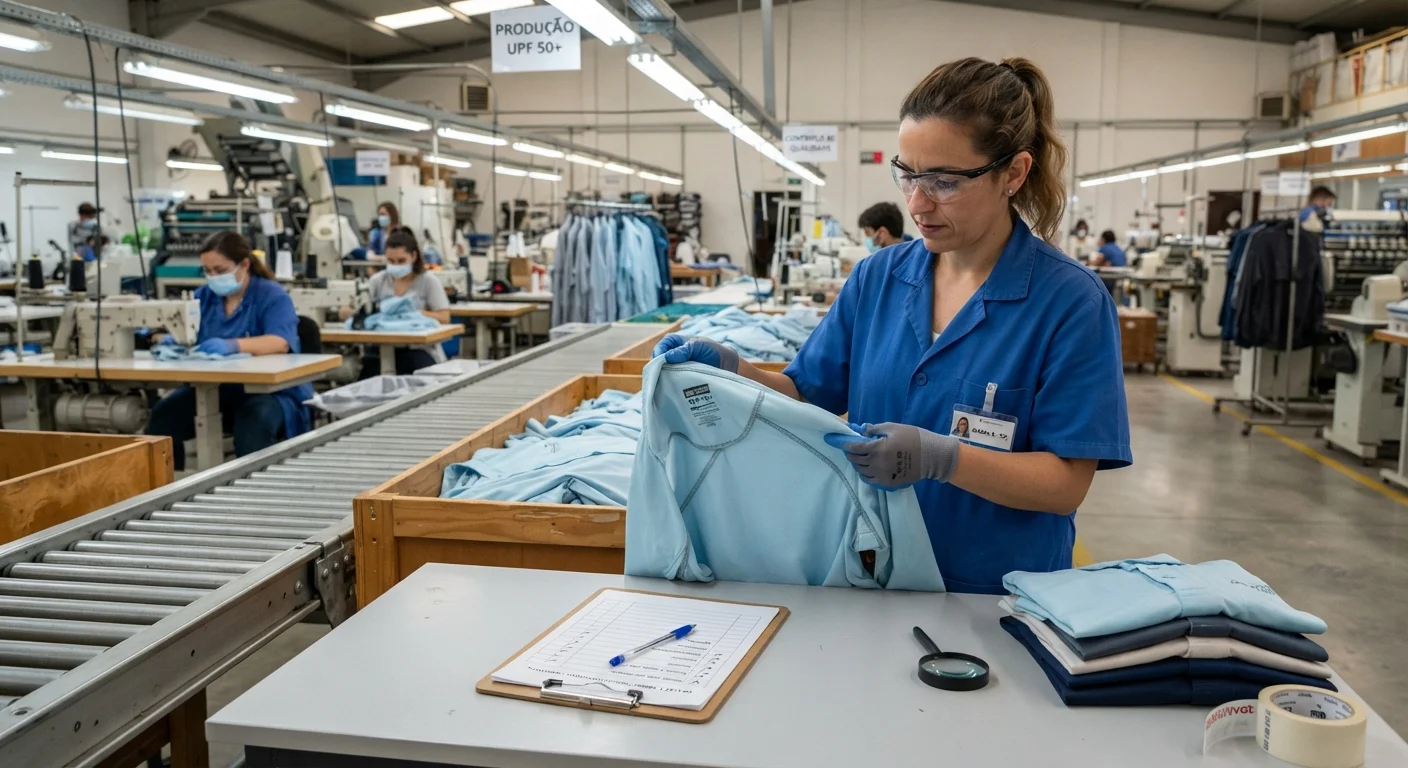
A Performance Fishing Shirt manufacturing partner should be the outfit that won't let you down when your brand's reputation is on the line. Portugal offers a genuine spread of capabilities for brands serious about UPF fishing shirts and other technical apparel: CFB's mastery of premium knit fabrics, Confetil's vertically integrated efficiency, and Customfishingwear's flexibility for smaller runs. What ties them together is decades of European textile craftsmanship backed by real certifications, not marketing copy.
If you're building a private label fishing wear line, request fabric swatches, ask pointed questions about MOQ flexibility, and talk to their current clients if you can. The right manufacturer becomes an extension of your brand, not just a line item on your P&L. Start those conversations now, because the fishing apparel market won't wait for you to catch up.