Three months ago, a startup fishing apparel brand sent us their tech pack with a simple deadline: 500 units in six weeks. Sounds routine—until you realize they'd already been burned once by a general garment factory that had no idea what "anti-snag fabric" meant, let alone how to test for UPF 50+ protection. They lost three weeks and a chunk of their budget before finding someone who actually understood custom fishing apparel manufacturing.
That story isn't rare. It's the norm for brands stepping into this space for the first time.
This guide breaks down what happens between your design file and the finished product sitting on a shelf—the fabric testing, the sampling rounds, the production timelines nobody tells you about upfront. You'll also get a straight-talk checklist for spotting a real fishing apparel private label manufacturer versus a factory that's just guessing its way through your order. By the end, you'll know what questions to ask before you wire a single deposit.
Manufacturing Process Breakdown: From Tech Pack to Final QC (6 Key Stages)
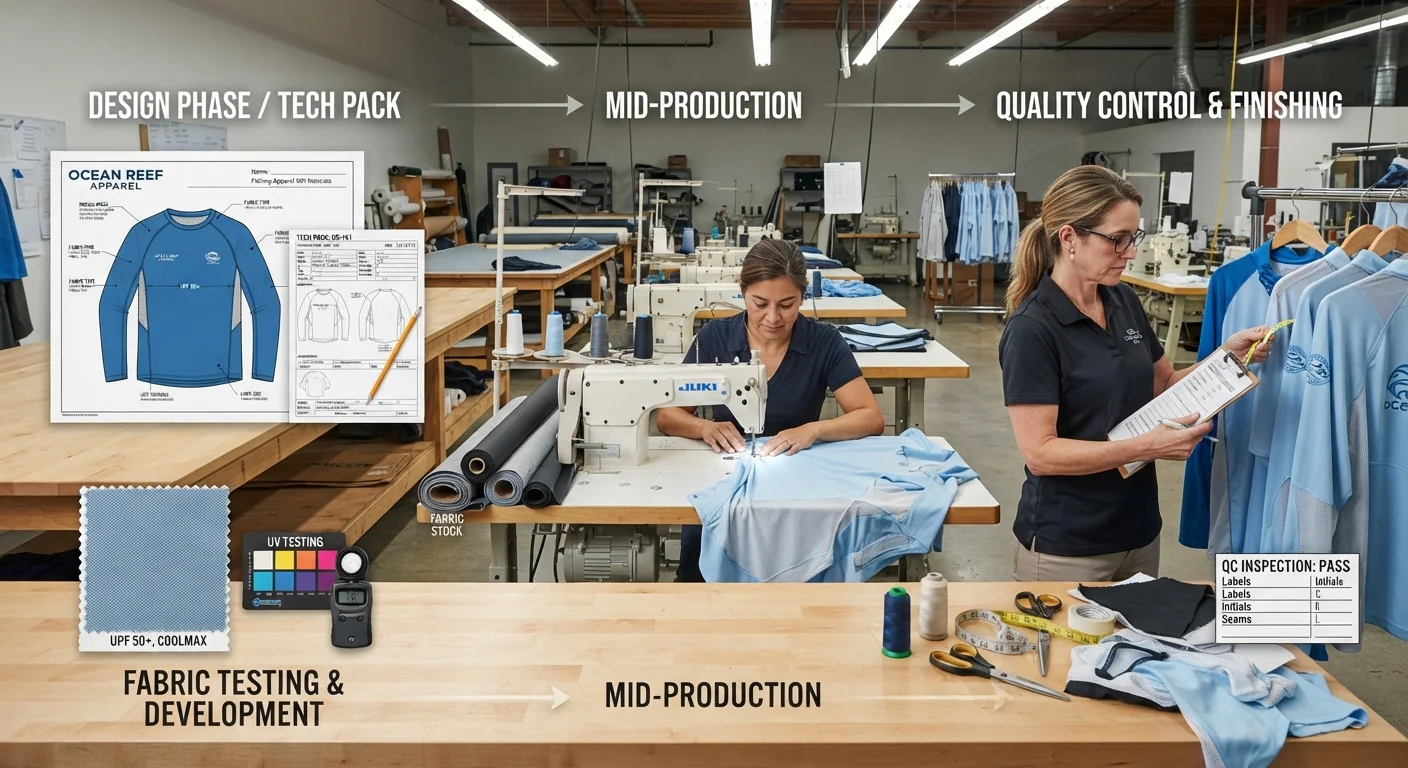
Six stages stand between your sketch and a shippable product. Skip one, rush one, or trust the wrong factory with one, and you'll feel it in your delivery date—or worse, in a warehouse full of shirts that don't fit right.
Here's what the fishing gear manufacturing process actually looks like, stage by stage, with the timelines nobody puts in the sales pitch.
Stage 1: Tech Pack & Order Review (1–2 Weeks)
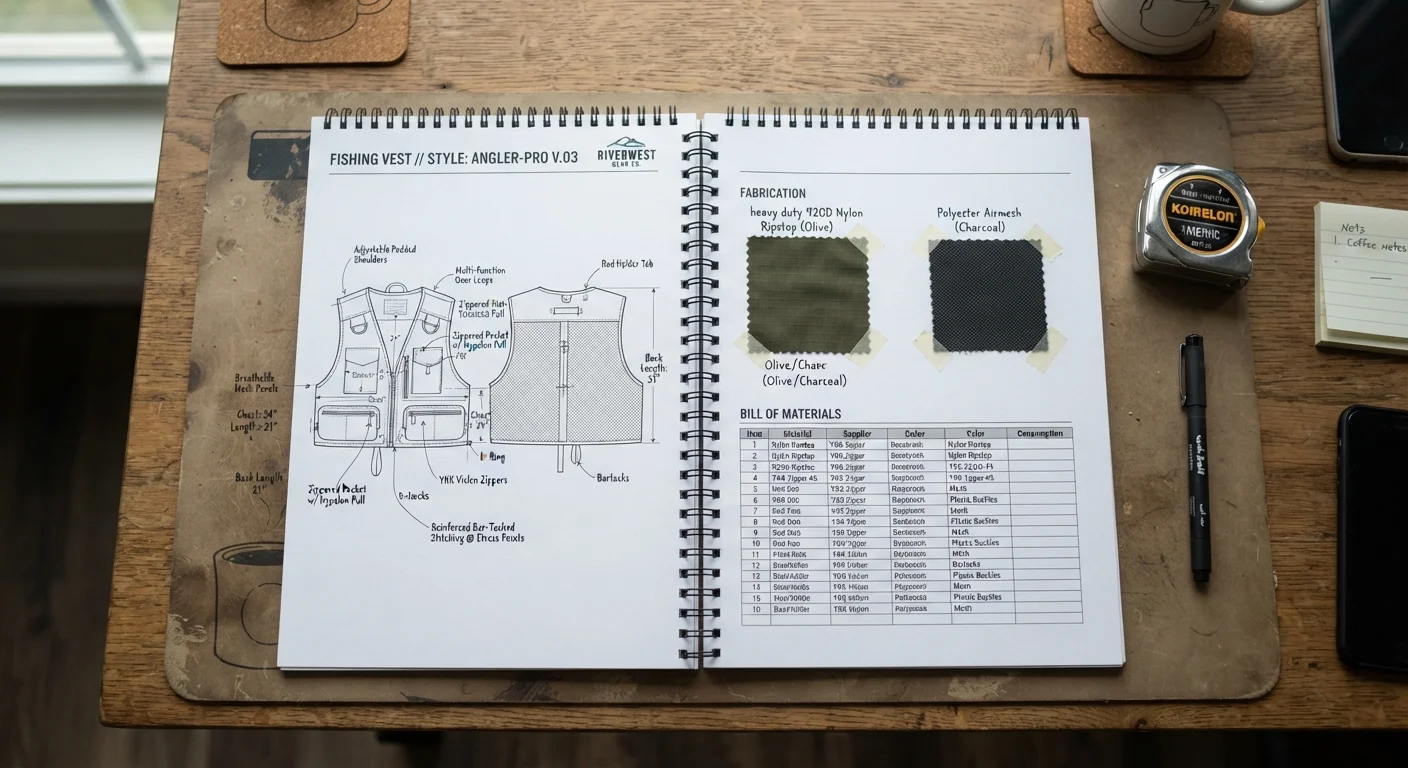
Your tech pack is the blueprint—BOM, measurement spec, colorways, trims, order quantity, delivery date. A solid custom fishing shirts manufacturer will review it line by line, checking tolerances (usually ±0.5–1.0 cm on key points) and flagging risky construction before cutting starts. This is also where you lock the AQL level—typically 2.5 for major defects, 4.0 for minor. Get this wrong, and every downstream QC check inherits the mistake.
Stage 2: Sampling & Approvals (2–6 Weeks)
Three sample rounds, minimum: proto sample (tests construction), fit sample (tests measurements), and pre-production sample—the frozen standard everything else gets compared against. First sample lands in 2–3 weeks; expect 1–2 revision rounds after that, each eating another 1–2 weeks. For graded styles, measure at least 10–20 garments in a size set before approving. Every change gets logged in the tech pack—skip this, and bulk production won't match what you approved.
Stage 3: Material Sourcing & Fabric QC (1–3 Weeks)
This is where a UPF fishing clothing manufacturer's credentials matter. Fabric gets tested using the 4-point defect system—scored per 100 yards, with rejection typically triggered above 40 points. GSM gets verified against target (±5–7% tolerance), shade bands get approved, and shrinkage plus colorfastness testing happens before anything touches a cutting table. Moisture wicking fishing shirts and anti-snag fabrics need this scrutiny especially—cutting corners here shows up on the water, not just on paper.
Stage 4: Pattern, Marker & Bulk Cutting (1–2 Weeks)
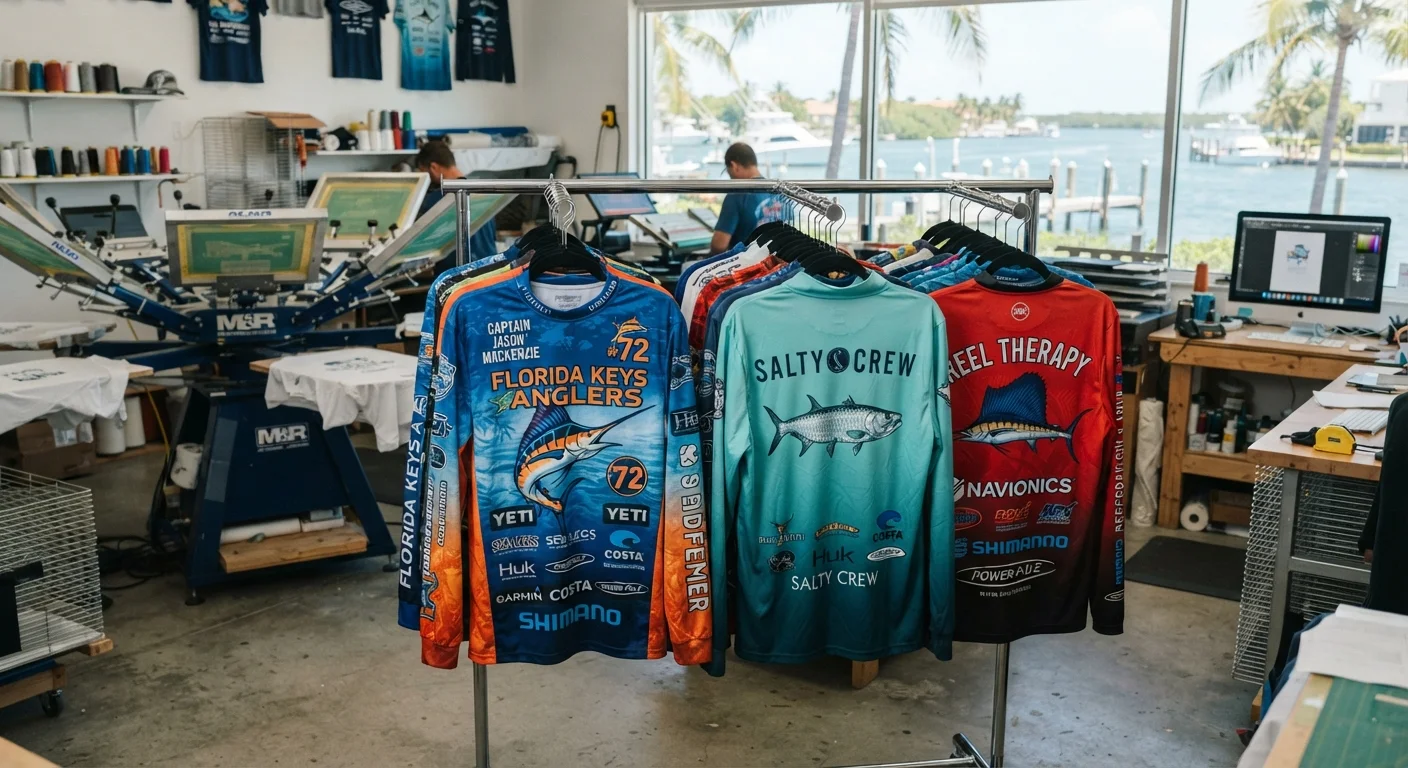
CAD patterns get graded across the full size range, then markers get optimized—good marker-making improves fabric yield 3–7% over manual layouts, which affects your final costing. Cutting QC checks grainline placement, ply height, and bundle accuracy. Sublimation printing fishing apparel styles need extra attention here—pattern alignment on printed panels has zero room for skew.
Stage 5: Sewing, In-Line & End-Line QC (2–4 Weeks)
Bulk sewing runs 20–35 days for standard orders. In-line checks track SPI (8–12 typical), seam strength, and defect rates—factories worth their salt keep inline defects under 2–3%. End-line inspection is usually 100% garment checking, with re-measurement on 10–20 pieces per lot.
Stage 6: Finishing, Final AQL QC, Packing & Shipment (1–2 Weeks)
Final inspection sorts defects into Critical/Major/Minor, metal detector checks catch stray needles, and cartons get verified for size/color ratio accuracy before shipping documents get issued.
Total timeline for OEM fishing clothing : 8–19 weeks, tech pack to shipment, depending on complexity and how fast approvals move on your end.
How to Tell a Real Fishing Apparel Manufacturer from a General Garment Factory
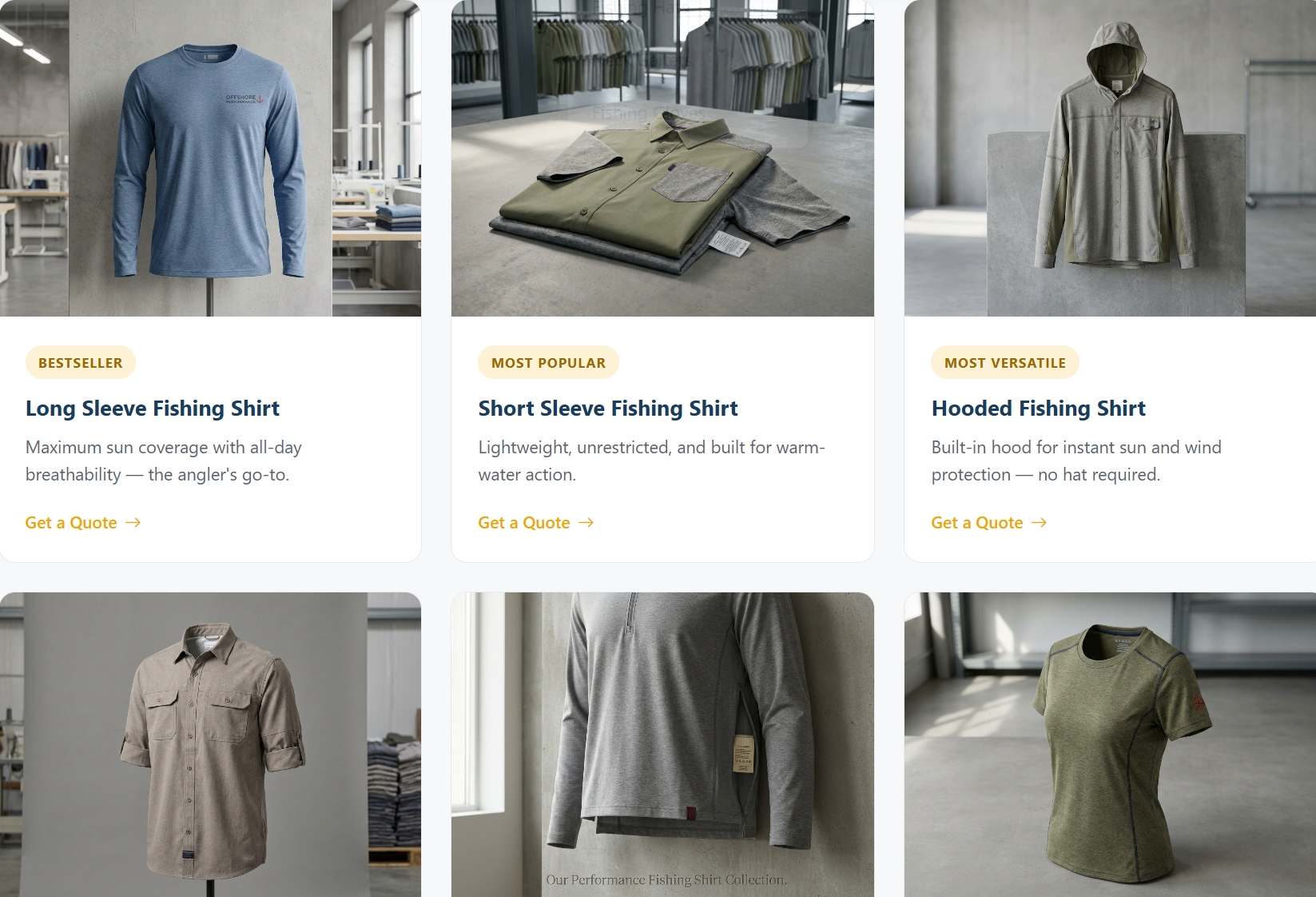
Anyone can print "outdoor performance" on a hangtag. Proving it takes more. The difference between a real fishing apparel private label manufacturer and a factory that's guessing comes down to documents, test results, and what happens when you ask to tour their floor.
Documents that separate specialists from guessers:
UPF 50+ test reports, with AATCC 183 or AS/NZS 4399 standards cited, not just a claim. Moisture-wicking lab data showing actual drying times. Waterproof ratings at 5,000mm hydrostatic head minimum for rain gear, 10,000mm+ for heavy conditions. Breathability data at 5,000 g/m²/24hr or higher for active wear. Fabric composition is 100% high-performance polyester for fishing tops. Fully taped seams on anything waterproof. Denier specs of 70D or 100D nylon when abrasion resistance matters.
Factory signals worth checking:
An in-house R&D team that refines specs instead of copying your file. Pattern version control per style. Ultrasonic welding machines, automated cutting tables, digital printing setups. Inline QC, not just a final check before boxing.
How to filter trading companies from actual factories:
Ask for their business license and make sure the scope says "manufacturing," not "sales." Request a live workshop video or a remote tour. If they stall, walk away. Demand sample-room proof and physical samples before you commit to bulk. Five-plus years in business is a reasonable screening benchmark. Third-party audits like BSCI or Sedex add confidence.
Two 60-second tests that expose fakes:
Stretch the fabric. Performance material rebounds fast and won't stay stretched out. Wet a corner. Fishing-grade fabric feels nearly dry within 60 seconds. If it's still damp at 2 minutes, it's not built for the water.
Red flags that should stop you cold:
No workshop footage. No samples. Vague MOQ or lead time answers that shift between calls. Generic "outdoor clothing" language with zero mention of UPF, breathability, or drying performance.
Build a proof pack before you commit: business license, workshop video, sample set, test reports, audit documents, client references, QC process notes, and a written MOQ/lead-time sheet. Skip any one of these, and you're gambling with your first production run.
Factory Inquiry Checklist: 10 Must-Ask Questions Before You Order
Print this list. Bring it to your first call with any wholesale fishing apparel supplier , and you'll know within 20 minutes whether you're talking to a real manufacturer or a middleman fishing for your deposit.
Here's the exact sequence to run through before you commit a dollar.
1. Are you the actual factory, or a trading company?
Ask directly. Request the business license and confirm the registered scope includes manufacturing.
2. What's your MOQ for a style like ours?
Custom fishing hoodies MOQs run lower than heavy-fabric outerwear. Get the number in writing, not a range.
3. What's your sample lead time, and what does it cost?
Keep this separate from bulk production lead time. Factories that blur the two are stalling.
4. What's your bulk production lead time and monthly output capacity?
Ask for units per month and whether they can absorb a repeat order without bumping your slot.
5. What QC checks happen at each stage—incoming materials, in-process, final?
Ask for their quality manual and pass/fail criteria, not just a verbal "we check everything."
6. What certifications or audits can you provide?
ISO 9001, BSCI, Sedex. Ask which ones apply to fishing apparel production.
7. Can you show recent work for similar products?
Request product links, purchase orders, or client references tied to fishing gear manufacturing, not generic apparel.
8. What are your payment terms and total landed cost?
Get packaging, shipping, and duties itemized upfront. Vague quotes are where 10-20% margin disappears.
9. Who's my point of contact, and what's the response time?
A one-day reply gap during sampling becomes a two-week gap during bulk production.
10. How do you handle defects or delays after shipment?
Ask what compensation or rework looks like if the final AQL inspection turns up problems your side didn't catch.
Run these ten across three separate suppliers. The gaps in their answers—vague MOQs, no cert names, no lead-time specifics—will tell you more about fishing brand clothing production readiness than any sales pitch ever will.
A regular cotton t-shirt blocks 10–17% of UV rays. A UPF 50+ fishing shirt blocks 98%. That gap is why this category exists and why vague spec sheets cost you money.
If you're sourcing custom fishing apparel, know these numbers before you call a factory.
UPF 50+: What the Rating Guarantees
UPF is a measurable standard.
Under EN 13758-1, UPF 50+ garments must block ≥95% of UVB and ≥98% of UVA. By UV transmission, UPF 15 lets through about 6.7%, UPF 30 lets through about 3.3%, and UPF 50+ lets through less than 2%. On the water, that difference is measured in minutes. A regular shirt can let sunburn set in within 15–20 minutes during a 6–12 hour session with reflected glare off the water, while a UPF 50 shirt prevents that for the entire trip.
Cotton and loosely woven fabrics can lose 50–90% of their UV protection once soaked, dropping from UPF 15 down to UPF 2–5. Tightly woven polyester and nylon don't have that problem. A properly built fishing shirt holds its full UPF 50+ rating wet or dry, and that rating should survive 50+ wash cycles before it degrades, roughly 3–5 years of regular use.
Fiber Composition: What's in a UPF 50+ Fishing Shirt
Most manufacturers cluster around a few standard blends: 90% polyester / 10% spandex for stretch-fit fishing tops, 92% polyester / 8% spandex for a slightly firmer hand, and 100% micro polyester shell (around 2.35 oz) with a 100% polyester lining (around 3.83 oz) for hooded fishing shirts.
Compared to cotton, these blends dry sweat roughly 60% faster and reduce heat buildup by about 4°F. That's the functional payoff behind moisture wicking claims on a spec sheet.
Sublimation Printing: The Fabric Requirement Nobody Explains Upfront
Sublimation is a heat-transfer dye process that only bonds properly into synthetic fiber. Polyester content needs to sit at 90% or higher, and most sublimation-ready fishing shirts run 90–100%. Spandex in the 5–10% range blends in fine without hurting print vibrancy. Confirm the UPF rating holds after printing. Some coatings degrade under sublimation heat, and a shirt that tested UPF 50+ before printing can drop after the transfer.
A typical OEM sublimation fishing shirt with 90% polyester, 10% spandex, and UPF 50+ has an MOQ around 100 pieces and sample lead times of 7–10 days. If a factory quotes wildly outside those numbers without explaining why, ask more questions before you sign anything.
Conclusion
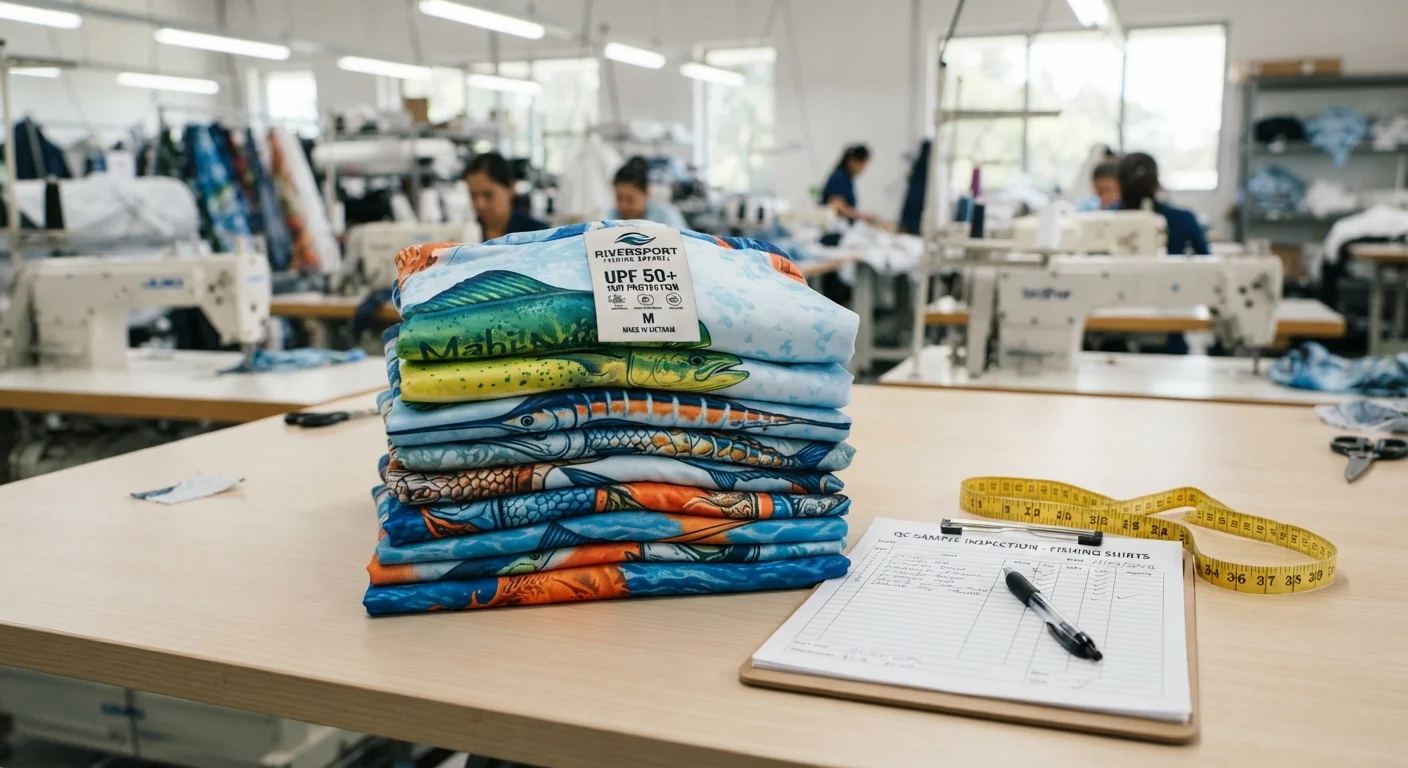
Launching a fishing apparel private label is straightforward once you know the steps. You’ve got the six-stage production timeline, a checklist to separate a real manufacturer from a shop that prints blank tees, and the vocabulary to discuss UPF ratings and moisture-wicking specs without being talked over.
Every question on that inquiry list you send to a potential custom fishing shirts manufacturer either builds trust or exposes a red flag. There is no middle ground.
Pull your tech pack together, shortlist three manufacturers, and run them through the 10 questions this week. The brands winning in fishing apparel right now are not the ones with the biggest budgets. They are the ones who asked the right questions before writing the first PO.