I watched a $280 3-layer fishing bib delaminate at the knees after one hard season hauling pots. A buddy’s $110 2-layer fabric fishing bib pair from the same brand is still holding strong three years later. Nobody writes that in the product description.
If you’re at checkout torn between a budget 2-layer set and a premium 3-layer laminate, the marketing pages won't help you. So we tested both across 100+ days of actual fishing — weekend trips, back-to-back offshore runs, and full commercial shifts kneeling on wet decks pulling line.
This isn’t fabric theory. It’s wear photos, leak points, breathability numbers that held up or didn’t, and a straight cost-per-season breakdown. You’ll see exactly when 2-layer is smart money, and when going straight to 3-layer saves you from buying twice.
Fabric Construction: Why 2‑Layer and 3‑Layer Bibs Feel Different on the Water
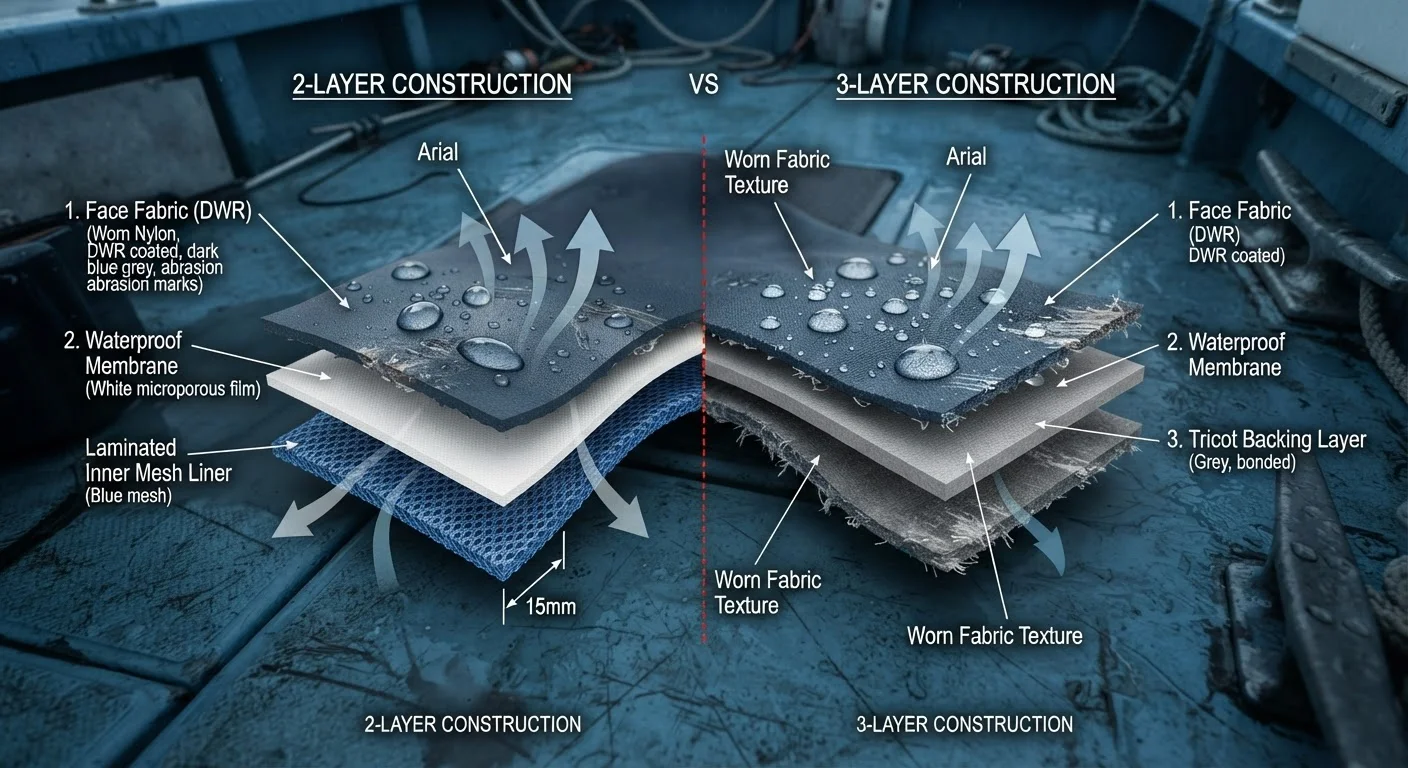
The layer count changes how the fabric moves, breathes, and holds water against your skin. It’s physics.
The Build: What’s Inside Each Fabric
2-layer bibs bond a face fabric (nylon or polyester) to a Waterproof/breathable membrane. Inside, a separate loose-hanging liner — usually mesh, taffeta, or soft nylon — floats unattached. That liner isn’t bonded to the membrane, so multiple layers move independently inside the bib.
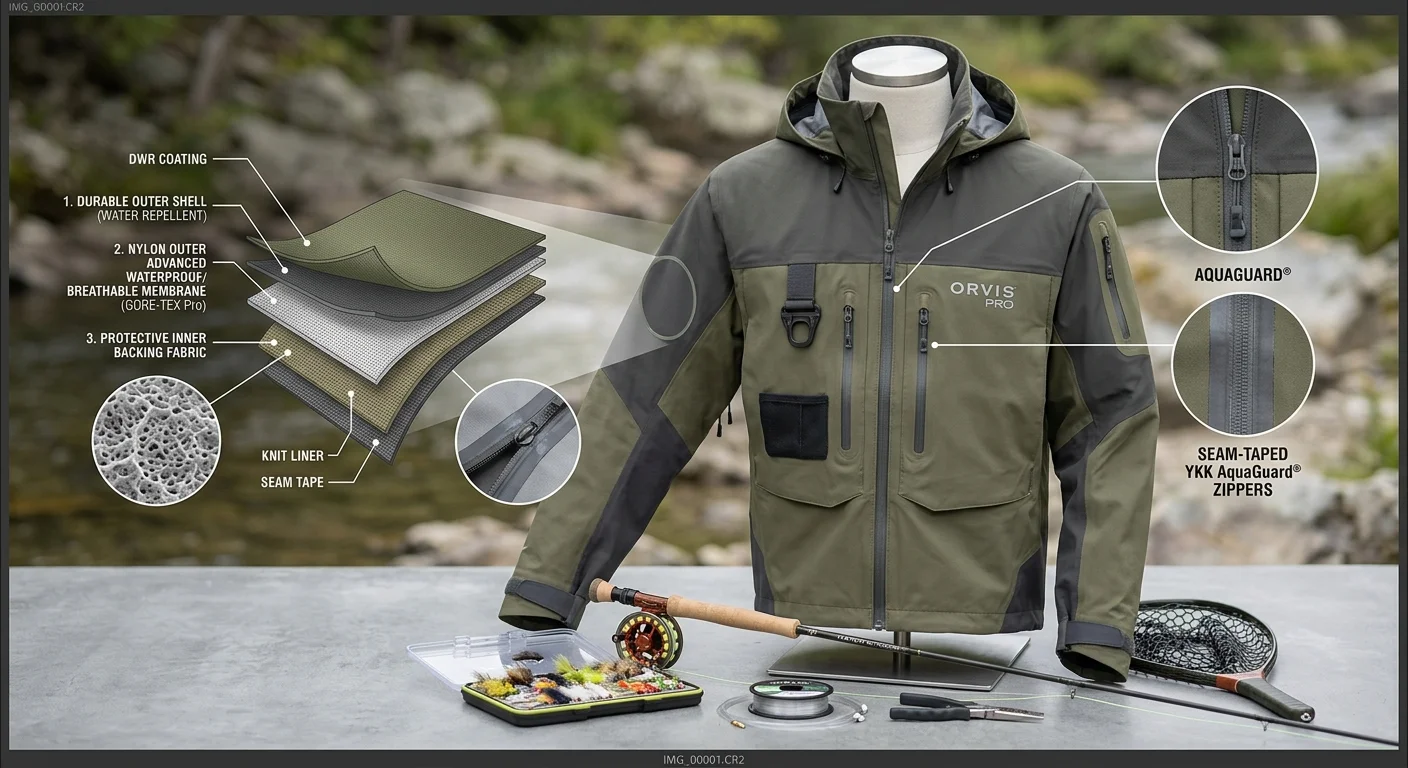
3-layer bibs laminate the face fabric, membrane, and a thin tricot or knit backer into one bonded sheet. Fewer moving parts, smoother interior, less bulk.
That single difference — bonded versus hanging — is why a 2-layer bib feels like “shell plus liner” that flaps and clings when wet, while a 3-layer bib moves as one solid piece.
Weight and Bulk: Why 3-Layer Feels Lighter on Long Days
REI’s gear team says 3-layer construction often ends up lighter than 2-layer because you remove that extra liner weight. GearChase backs this up — 3L laminates deliver more durability with less bulk.
On the water, that plays out like this:
2L bibs get heavier and “soggy” once the liner soaks up spray or rain.
3L bibs stay lighter and crisper through long paddling sessions or extended wading.
Drape matters too. That extra liner in 2L gear creates volume — it can balloon with trapped air or cling when wet. 3L’s flatter laminate means less flapping and better range of motion. If you’ve ever felt bunchy fabric at your knees while seated in a kayak, that’s a 2L problem. 3L stays streamlined around joints.Brands comparing a 3 Layer Waterproof Fabrics Fishing Bib manufacturer should also check laminate construction consistency.
Breathability: Where the Real Gap Shows Up
This is the difference users notice fastest. In 2L bibs, that separate liner creates an air gap that slows vapor transfer. Mesh and taffeta liners hold onto moisture, so you feel clammy the moment you start working hard.
3L bonds the backer fabric directly to the membrane, keeping it close to your base layers. Outerwear guides consistently describe 3L as “much more breathable” — built for high-output use. You get less condensation around your chest and lower back during hard paddling, and less of that “wet-inside” feeling when spray is constant.
2L feels warm but damp. 3L feels drier, even when the outside is soaked.
Water Retention Inside the Fabric
Both fabric types use DWR-treated face fabrics to bead water on the surface. But once DWR wears down and fabric “wets out,” the inner layers matter more.
2L liners wick and hold water from leaks, sweat, or spray — leaving heavy, clingy fabric at your thighs and seat, with slow drying times.
3L backers are thinner and less absorbent, so less water gets retained inside, and the fabric dries faster against your body.
This is why 3-layer construction gets recommended for continuous wet environments like fly fishing. The same logic applies to fishing bibs.
Durability at the Membrane Level
3L’s bonded backer protects the membrane from sweat, oils, and grime — pores stay clear longer and breathability holds up between washes. In 2L bibs, the membrane sits more exposed behind that loose liner, so pore clogging happens sooner.
3L fabric has a firmer hand when dry. That stiffness pays off when soaked — it holds its shape instead of collapsing and clinging to your skin. Over months of wear, 2L bibs feel softer but soggier as internal moisture builds. 3L stays consistent: crisp, structured, predictably dry inside, day after day.
Waterproof & Breathability: Lab Data vs. Real‑World Sweat and Spray
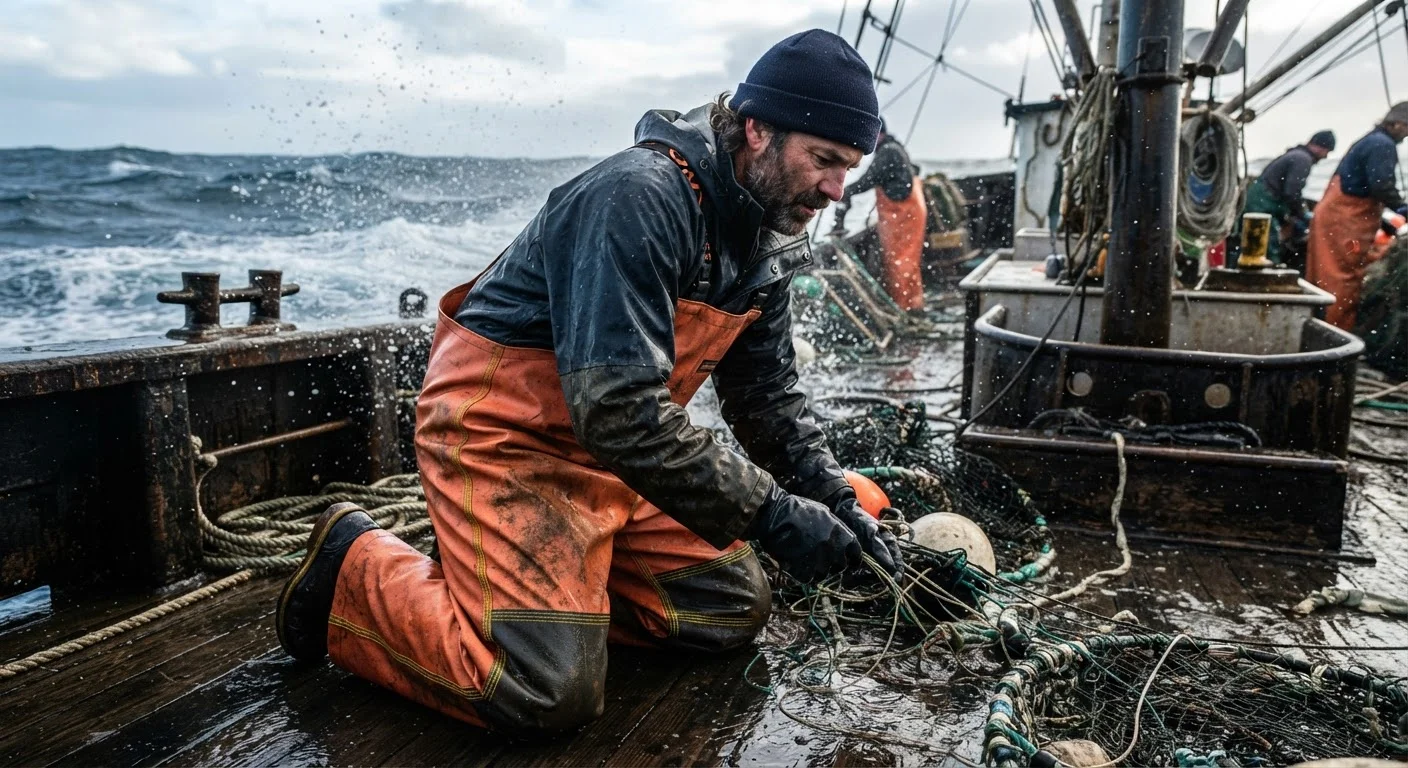
A hang tag that says "20,000mm waterproof" tells you almost nothing about how a bib performs when you're kneeling on a wet deck for six hours straight. Most fishing bib buyers only ever see the lab rating, not how the bib handles real sweat and spray.
What the Numbers Mean
Hydrostatic head (HH) measures how much water pressure a fabric resists before it leaks. For fishing apparel, here's how that translates:
0–5,000mm : light rain only — not enough for offshore spray.
5,000–10,000mm : moderate rain, short exposure.
16,000–20,000mm+ : heavy rain, wet snow, and sustained pressure points like kneeling or pack straps.
That last band matters most for anyone gutting fish or hauling pots for hours. If a waterproof rating on fishing apparel sits below 15,000mm, don't expect it to hold up against repeated kneeling and abrasion in wet conditions.
Breathability works on a separate scale: MVTR (grams of vapor per square meter per day).
≤5,000 : sweat gets trapped fast.
10,000 : fine for light activity.
20,000+ : needed for anything active — hauling lines, working a deck, fighting fish.
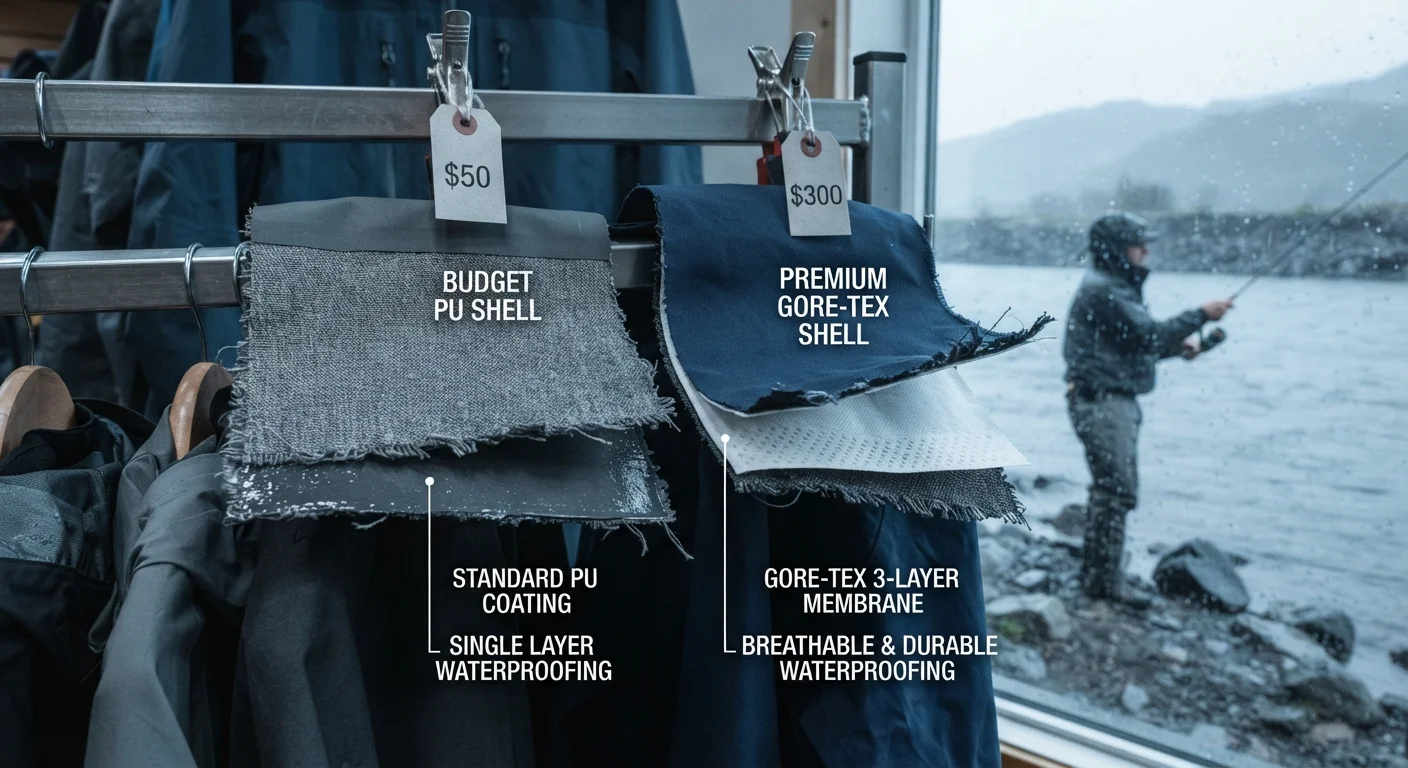
A true Gore-Tex fishing bib or premium 3-layer laminate usually clears that 20,000 mark. Cheaper PU coating vs. laminate fabric setups often don't, even when the waterproof number on the label looks impressive.A reliable 2 Layer Waterproof Fabrics Fishing Bib supplier should provide both waterproof and MVTR test data.
The Humidity Penalty
Breathable waterproof fabric technology loses 40–60% of its effectiveness once ambient humidity climbs above 80%. That's the condition you're fishing in during summer mornings with fog rolling off the water. Your bib might test great in a lab at 40% humidity and still leave you soaked from the inside on a humid dawn trip.
Underarm and back vents improve perceived comfort by 35–40% above 75°f, regardless of which membrane brand is stitched inside. If your 3-layer bib doesn't have vents, you're leaving performance on the table.
A Field Test You Can Run in 30 Minutes
Wear the bib during 30 minutes of brisk movement at 70–75°F.
Check the interior. Dry or slightly damp means adequate for that exertion level. Soaked means the fabric can't keep up with your workload.
Repeat with vents open. You should feel a noticeable drop in sweat buildup. If not, the vent design is failing regardless of what the fabric technology claims.
Why Swatch Numbers Don't Match Finished Bibs
Seam tape, zippers, and stitched panels can cut effective waterproofness by 30–40% compared to the raw fabric's hydrostatic head. We've seen fabric rated at 15,000mm leak at the seams during simulated spray tests. A seam-taped 3-layer bib will consistently outperform an unsealed one, even if both use identical membranes.
Don't buy on the mm number alone. Ask what MVTR the finished garment tested at, not just the swatch, and confirm seams were pressure-tested, not just the fabric.
Durability Under Fire: Abrasion, Seam Wear, and Leak Points After 100+ Days
Numbers don't lie, but marketing copy sure does. Abrasion resistance and seam strength get buried in spec sheets while brands push waterproof ratings front and center. Request a custom wholesale price for 3 Layer Waterproof Fabrics Fishing Bib before comparing bulk orders.That's backwards. For anyone logging 100+ days on a deck, abrasion and seam integrity determine whether your bib survives the season, not the hydrostatic head number on the tag.
Abrasion Ratings: What the Class Numbers Predict
Industry testing (EN 530/EN 14325) classifies fabric abrasion resistance on a 1–6 scale based on rubs before wear-through:
Class | Rubs Before Wear | Real-World Fit |
|---|---|---|
6 | 2,000+ | Daily commercial use |
5 | 1,000+ | Heavy offshore rotation |
4 | 400+ | Moderate weekend/charter use |
3 | 100+ | Occasional recreational trips |
2 | 40+ | Light, infrequent wear |
1 | 10+ | Not built for fishing gear |
If you're kneeling on wet decks, dragging nets, or bracing against gunwales daily, anything below Class 5 is a gamble. Martindale testing backs this up: fabrics rated 40,000+ cycles hold up to demanding environments. Gear built for hospitals and transport interiors, surfaces that see constant daily friction, often clears 100,000+ cycles. That's the ceiling you want for commercial fishing rain gear fabric.
Seams Fail Before Fabric Does
Seams are the real weak link. EN 13935-2 classifies seam strength 1–6, and here is the practical takeaway: seam strength and tear strength are almost always the first properties to drop below spec after repeated use and cleaning, not the base fabric.
One fire-gear durability study tested outer shell material through 40 laundering cycles, a reasonable proxy for months of hard use plus regular washing. By cycle 40:
Tear strength dropped more than one standard deviation below new-material values, below the minimum required for new gear.
Seam strength fell below the same baseline requirement.
Laundering alone degraded strength faster than heat or field exposure did.
Translate that to fishing bibs: the seams at your knees, seat, and shoulders, the zones under constant flex and friction, are where failure shows up first. Not because the fabric wore through, but because the stitching gave out underneath it.
A 30-Second Seam Test Before You Buy
You don't need a lab to spot a weak seam. Grip fabric on either side of a seam and pull with moderate tension.
Daylight between the threads means that seam will likely open under sustained outdoor stress.
No gap, no give means you are looking at a double-stitched or taped seam built to outlast single-thread construction.
Fully taped seams matter even more on custom waterproof-rated fishing apparel. Untaped stitch holes are common leak points once flexing wears down the DWR around them.
Where Failure Starts
Across every durability model reviewed, the same zones repeat as early-failure points:
Knees, from kneeling on deck or in a boat
Seat, from sitting on coolers, gunwales, or coils of rope
Shoulders and underarms, from harness straps, gear slings, and repetitive reach
If a bib does not reinforce these zones with double stitching or bartacked corners, expect leak points here first, regardless of whether it is 2-layer or 3-layer construction underneath.
Conclusion
After 100+ days of real saltwater abuse, your fishing calendar decides this purchase. If you're hitting the water a dozen weekends a year, a quality 2-layer bib will outlast your enthusiasm and save you $150+ upfront. If you're grinding through 80+ commercial days annually—kneeling on deck plates, dragging gear across gunwales—a 3-layer laminate is cheaper insurance against mid-season blowouts.
The abrasion resistance numbers show that 3-layer construction survives friction points 2-layer fabric can't.
Skip the tenth product page. Match your annual trip count against the decision tree above, pick your fishing bibs price tier, and buy once.