You send the same tech pack to two factories and get back two wildly different quotes—one nearly double the other—and suddenly you're wondering what you're actually paying for. Sound familiar? Almost every brand founder hits this moment when comparing cut make trim (CMT) and full-package manufacturing, and it's rarely explained in a way that helps you make a decision. We're breaking down who sources the fabric, who eats the cost when a shipment's delayed, and how the same T-shirt carries two completely different price tags depending on the model you choose. You'll walk away with real numbers, a responsibility checklist, and a clear sense of which setup fits your order volume—so your next fishing apparel factory negotiation starts from knowledge, not guesswork.
Who Handles What: CMT vs Full Package Responsibility
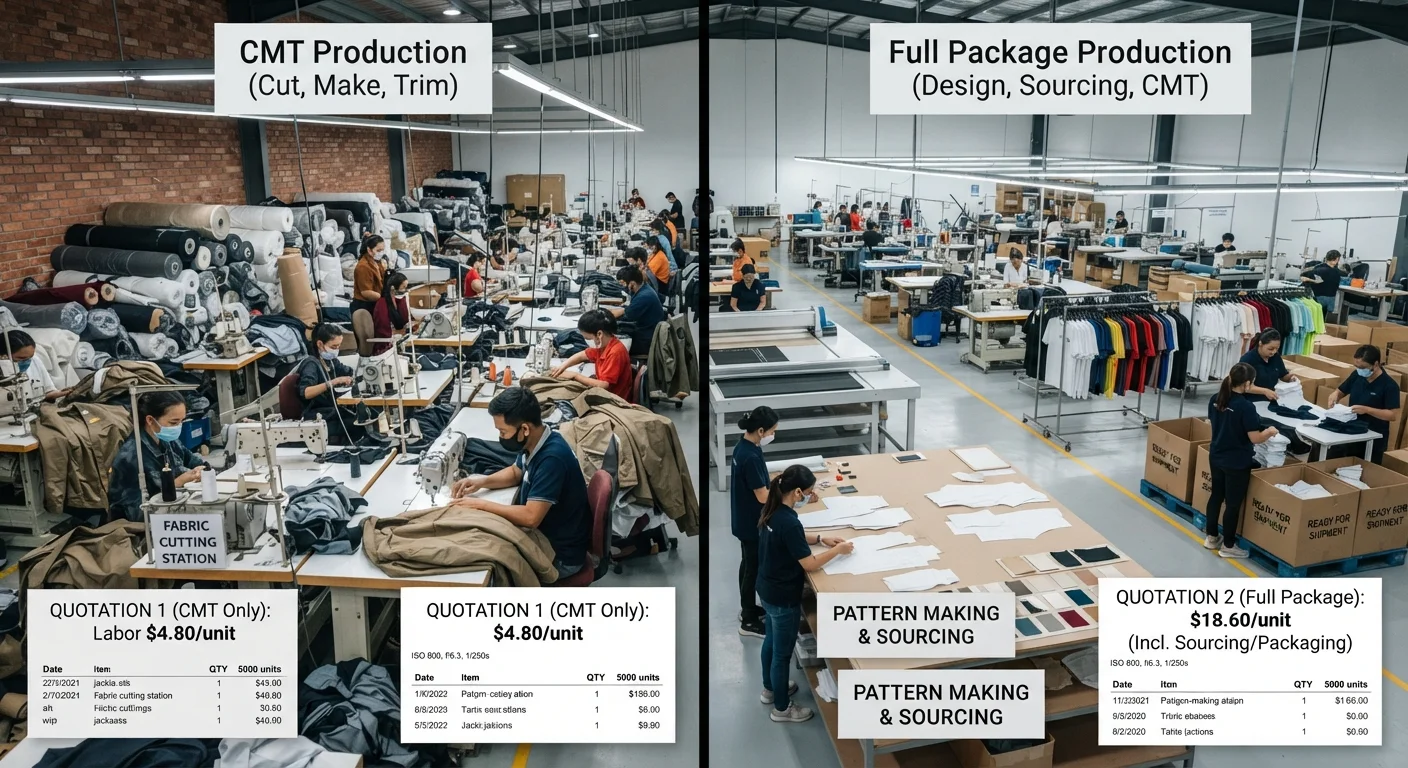
"CMT" and "full package" are two different divisions of labor, and mixing them up is how brands end up covering unexpected costs. Here's who does what.
Fabric Sourcing
CMT: You source the fabric, buy it, and ship it to the factory. The factory never touches procurement.
Full package: The factory sources fabric to your spec and manages the entire supply relationship. You approve; they execute.
This is the biggest fork in the road for fabric sourcing responsibility. It determines who's exposed when a mill runs late or a dye lot doesn't match.
Pattern-Making, Grading, and Sampling
CMT: Patterns and tech packs are your job. Strict CMT arrangements put pattern-making on the brand's plate.
Full package: The fishing apparel factory handles pattern-making, grading, and sampling in-house—part of why it's a popular apparel sourcing model for brands without an internal design team.
Packaging
CMT: You supply packaging materials separately. The factory's involvement usually stops at basic folding or trimming.
Full package: Packaging is baked into the service, and many factories will also manage outbound logistics.
Quality Control
CMT: You retain control over material specs, testing, and often the logistics moving product in and out of the factory. The factory's role is labor execution—cut, sew, trim, done.
Full package: QC sits with the factory as part of end-to-end production oversight.
The Risk-and-Cost Bottom Line
In CMT, you carry the sourcing risk because you're the one buying and supplying materials—if fabric arrives late or defective, that's on you. In full package, the factory absorbs more of that risk since they're procuring and delivering finished goods.
This risk split shows up directly in the fishing garment factory pricing structure. CMT quotes typically cover labor only, while full package pricing bundles fabric, trims, production, and sometimes logistics into one number.
One more term worth knowing: CMPT, which adds packing to the cut-make-trim scope, sometimes including export-ready documentation. It's a useful middle ground if you want a bit more off your plate without committing to full package.
Same T-Shirt, Two Quotes: Itemized Cost Breakdown of CMT vs Full Package Manufacturing
Numbers make this real fast. Put two quotes for the exact same basic tee side by side, and the gap tells you more than any explanation ever could.
The Baseline Numbers
For a basic T-shirt, CMT labor-only pricing runs $1–$3 per piece for simple styles. More complex garments with paneling or embellishment can climb to $8–$15+ . One fishing apparel factory in Chittagong quoted $1.80–$2.50 per piece on a 500-unit order, labor only.
Full package pricing on the same style lands 30–50% higher , since it's an all-in number. One OEM fishing apparel full-package quote came in at $2.80–$4.50 per piece for a comparable volume. Move to a Los Angeles fishing apparel factory and full-package rates jump to $14–$52 per unit , depending on garment category, with a fabric markup of 15–25% baked on top of factory cost.
Where the Money Goes
Break down a full-package or FOB quote and here's roughly how it splits:
Fabric: 40–60% of total cost
CMT labor: 15–30%
Factory overhead and margin: 15–20%
Trims and accessories: 5–15% (labels, hangtags, zippers, polybags, thread)
Freight: 3–8%
Duty/import: 5–25%, depending on HS code and country of origin
Packaging: 2–5%
Testing and QC: 1–3%
Some sourcing structures roll logistics and transportation into one line, and that alone can eat 18–31.5% of total cost.
The Cheaper-on-Paper Trap
CMT looks like the deal until you add freight, duty, testing, and the hours spent coordinating three separate vendors. One comparison found CMT saving ₹230–430 per shirt ($2.53–4.73) , roughly 20–33% less than FOB, but only if your sourcing runs clean. Add delays, rework, or a missed dye lot, and that math flips fast.
For orders under 150 units , full package often wins on total cost once you factor in time and coordination. The full-package premium runs 20–40% higher per unit , and buys you one invoice instead of five headaches.
Which Model Fits Your Brand: Matching CMT or Full Package to Order Volume Design, Budget
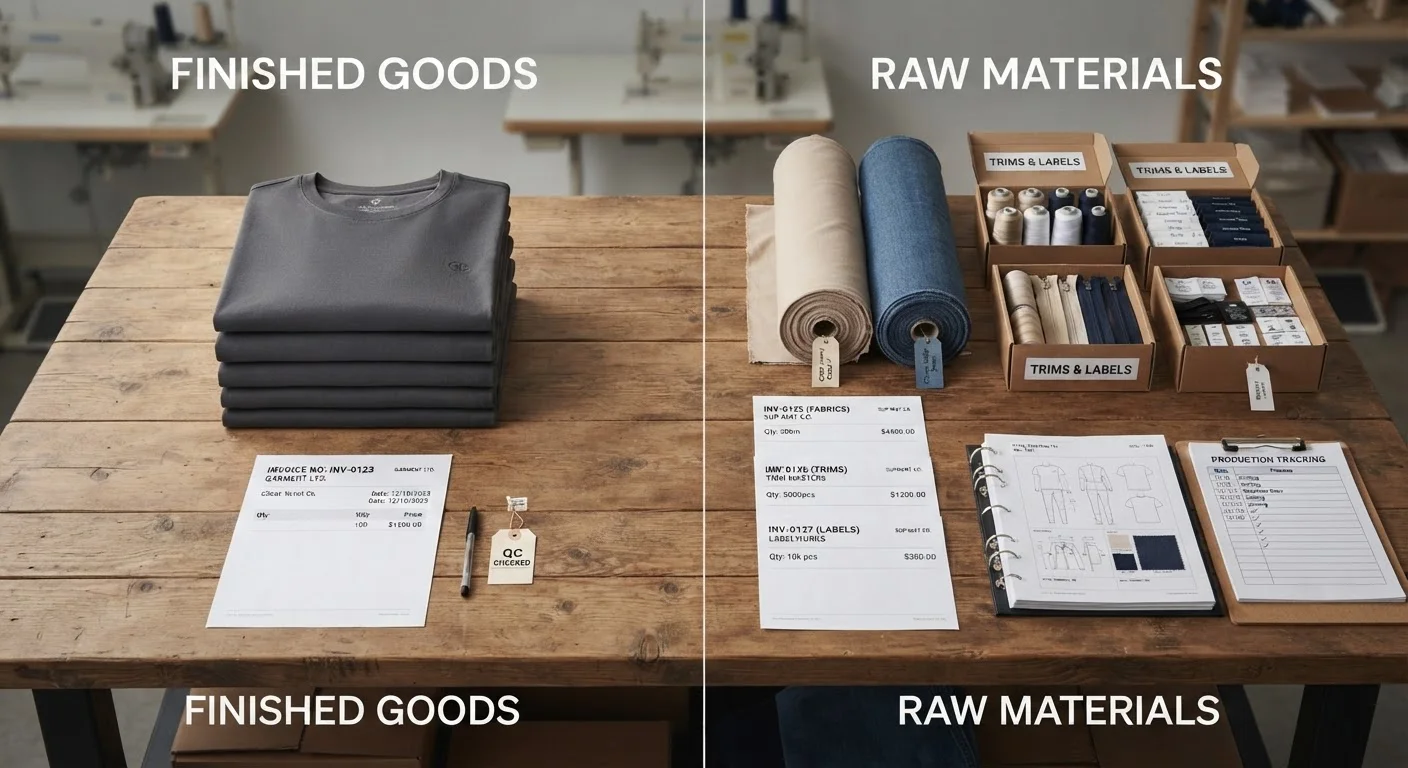
There's no "better" model. There's the model that fits where your brand is right now. The answer comes down to three things—how many units you're ordering, whether you have someone in-house who lives and breathes tech packs, and how much cash you can tie up before a single shirt ships.
Start With Volume
Fabric mills won't run less than 500 yards per custom fishing clothing color . That minimum shapes everything downstream. Full package factories are built for throughput, so they lean toward higher MOQs and tend to discourage small experimental runs. CMT factories can go lower—especially when you're supplying the fabric and trims yourself and you're willing to absorb a higher per-unit labor cost.
The crossover point is consistent across sourcing data: under 150 units per style, full package usually wins on total cost , even though the quoted unit price runs 20–40% higher. Above roughly 300 units, CMT starts pulling ahead —assuming you already have fishing clothing fabric suppliers lined up and can buy at scale.
Factor In Your Team
CMT demands real internal muscle: someone who can build tech packs, manage fit approvals, and juggle quality control across multiple vendors. It's the right call for brands with an in-house designer or production manager. Full package needs none of that. It's "turnkey" for a reason, letting non-technical founders focus on branding while the factory handles development.
Don't Forget Timeline
CMT typically adds 2–5 weeks to your production calendar, because you're sourcing fabric and troubleshooting delivery issues yourself. If speed to market matters more than shaving a few dollars off unit cost, weigh that timeline gap before you commit.
Fabric Delays, Minimum Order Traps, and Misaligned Quality Standards Erase CMT Savings
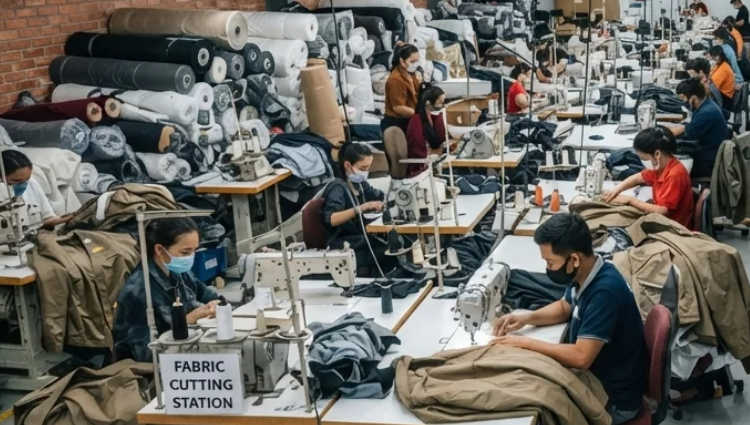
A hundred-unit t-shirt run under CMT can save you $6–$8 per unit, call it $600–$800 off the invoice. Feels like a win. But spend three weeks chasing down fabric yourself, and at $30–50/hour, that "savings" turns into $1,800–$4,000 of your own unpaid labor. Hidden CMT costs tend to exceed the full-package premium after the very first significant production error.
Fabric delays hit harder than they look. Out-of-stock fabric adds 2–6 extra weeks to a timeline that's already 16–24 weeks from briefing to delivery in many nearshore setups. A 7–14 day shipment delay can push you past your selling window, and retailers lose up to 12% of margin annually to markdowns from this kind of timing miss, often 25–35% off, off-cycle. Panic-switch to air freight to save the season, and you're paying 3–5x ocean rates, so a $2,000 container becomes $8,000–$12,000 overnight.
Minimum order traps bleed cash. If you need fabric for 100 units but the mill's minimum covers 200–300, that extra yardage becomes unused inventory, storage cost, and eventual clearance-sale scraps. Factor in the standard 3–10% fabric waste rate, and your real material spend can run 10% over budget before a single shirt is cut.
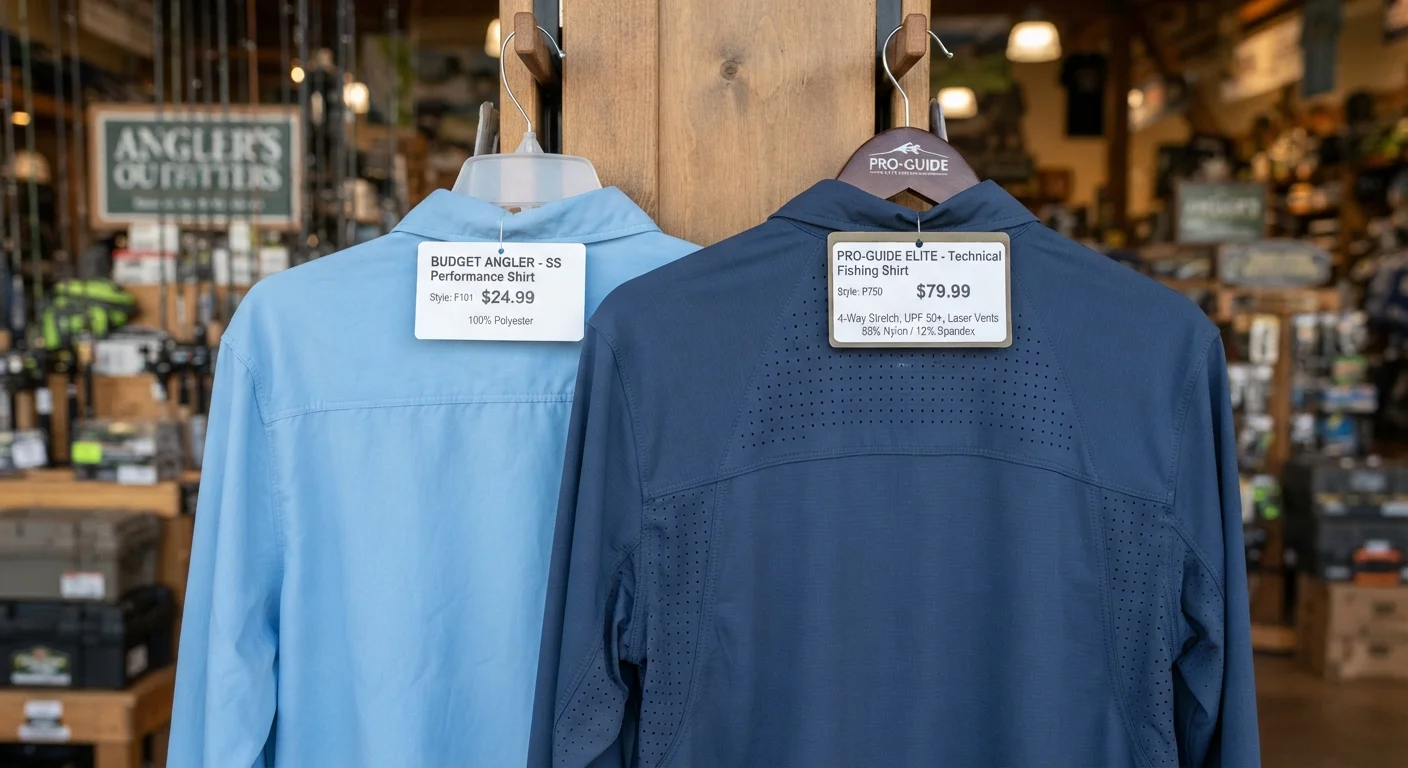
Misaligned quality standards are the sneakiest cost of all. Cheap fabric ($0.65) versus premium ($0.92) looks like an easy call, until you see the defect rate gap of 10% versus 2%, with return rates of 5% versus 1%. Net profit margin lands at 8% for cheap fabric, 14% for premium. And when you supply your own fabric, as CMT requires, factories often disclaim responsibility for shading or shrinkage issues, so re-cutting and re-sewing come out of your pocket, not theirs.
From CMT to Full Package: How to Negotiate the Switch Without Losing Pricing Leverage
The leverage you had as a CMT buyer does not carry over when you ask for full package. You have to rebuild it, on purpose, with numbers.
Ask for the Breakdown, Not Just the Price
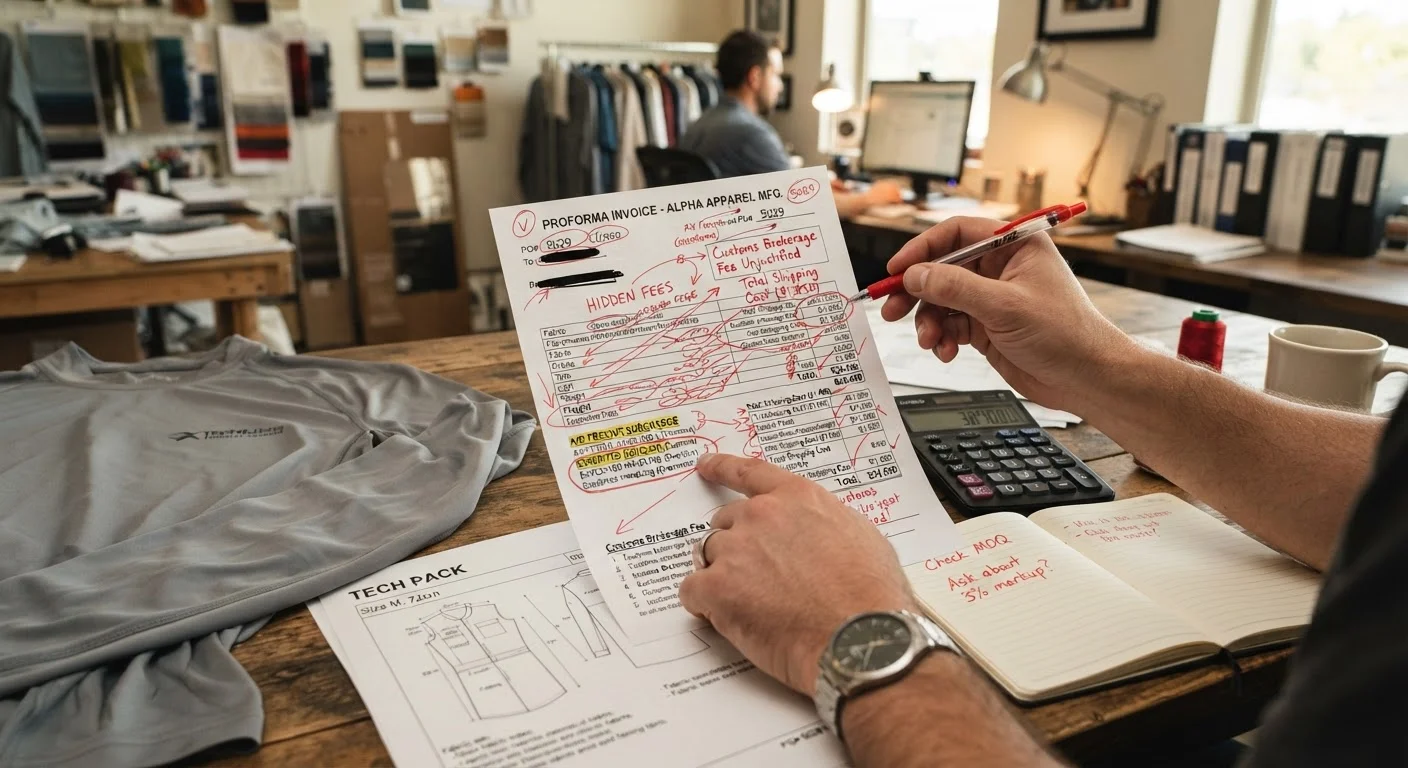
Before you sign anything, demand line-item quotes that list fabric composition and GSM, yield per garment, trims cost, SMV-based labor rate, overhead, and margin percentage. Send the same tech pack and quantity to two or three factories. Do not reveal your target price first. Let them anchor. Some factories will resist breaking things down. Push anyway. At minimum, get fabric cost per meter, consumption per style, labor per piece, and margin percentage.
Run CMT and Full Package Side by Side
Ask the same factory to quote both models on the same tech pack. Compare their fabric markup against outside mill quotes. Industry benchmark is 5–15% over mill price. If it is higher, you have room to push. Tell your preferred factory you have another quote $0.25 cheaper per piece and ask what they can do to close it.
Trade Volume for Price, Not Just Ask for a Discount
Consolidate orders across styles to hit MOQs. That could mean 100 units across three styles instead of 300 of one. Negotiate tiered annual pricing: 5,000 pieces at $4.10, 10,000 at $3.95, 20,000 at $3.80 instead of per-drop rates. Ask for better payment terms too. Moving from 30% deposit to 20% frees up cash flow.
Package the Whole Deal
Do not concede on price alone. Tie every price drop to something you get back: longer payment terms, a rebate at volume, or lower MOQ. Get it all in writing, including what happens if cotton prices swing more than 10%.
Conclusion
No single model works for every brand. The one that fits where your brand actually stands today is the right choice. If you're running smaller batches and still figuring out your fit, cut make trim (CMT) keeps your cash flexible, even with its fabric-delay headaches. Once you're placing consistent, larger orders and want quality control off your plate, full package manufacturing starts paying for itself.
You walk into your next fishing clothing factory call knowing exactly which costs are negotiable, who's liable when fabric shows up late, and how to price-check a quote instead of just trusting it.
So before you sign anything, pull out that responsibility checklist we walked through, run your numbers against it, and ask your factory the pointed questions this article armed you with.